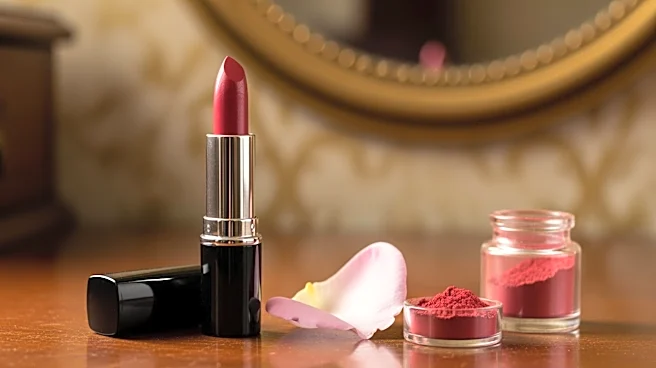





Lipstick has been a staple in the world of cosmetics for thousands of years, evolving significantly from its early beginnings to the modern product we know today. This article explores the fascinating journey of lipstick, tracing its origins from ancient civilizations to its widespread popularity in contemporary culture. By examining the historical context and cultural significance of lipstick, we can better understand its enduring appeal.
Ancient Beginnings
The use
of lipstick can be traced back to ancient civilizations such as the Sumerians and the Indus Valley Civilization, where both men and women adorned their lips with color. The Sumerians, for instance, crushed gemstones to decorate their lips and eyes, while the Egyptians, including Cleopatra, used crushed bugs to create a red hue for their lips. These early forms of lipstick were not just about beauty; they also signified social status and were used by both genders.
In ancient China, lipsticks made from beeswax were used over a thousand years ago to protect the lips. During the Tang dynasty, scented oils were added to these lipsticks, enhancing their appeal. Similarly, in Australia, Aboriginal girls used red ochre to paint their lips during puberty rituals, highlighting the cultural significance of lip coloring across different societies.
Lipstick in the Western World
Lipstick gained popularity in the Western world during the 16th century, particularly in England under Queen Elizabeth I, who popularized the look of bright red lips against a stark white face. At that time, lipstick was made from beeswax and plant-based red stains. However, its use was limited to upper-class women and male actors, as cosmetics were often associated with marginalized groups.
The 19th century saw a shift in attitudes towards cosmetics, with the first commercial lipstick being created by Parisian Maison Guerlain in 1870. This lipstick was made from deer tallow, castor oil, and beeswax, and was sold wrapped in silk paper. By the early 20th century, lipstick had become more widely accepted, with innovations such as the swivel-up tube making it more convenient to use.
Modern Developments and Trends
The 20th century brought about significant changes in the formulation and perception of lipstick. During World War II, metal lipstick tubes were replaced by plastic and paper due to material shortages. The post-war era saw the introduction of long-lasting lipsticks, such as Hazel Bishop's No-Smear lipstick, which became a commercial success.
Throughout the decades, lipstick trends have evolved, with colors and finishes reflecting broader cultural shifts. The 1950s saw the resurgence of dark red lips, popularized by actresses like Marilyn Monroe and Elizabeth Taylor. In the 1960s, white and pale lipsticks became fashionable, while the 1970s introduced more unconventional colors like iridescent blue and green.
Today, lipstick continues to be a symbol of self-expression and empowerment, with a wide range of colors and formulations available to suit every preference. From its ancient origins to its modern iterations, lipstick remains an enduring and versatile cosmetic product.