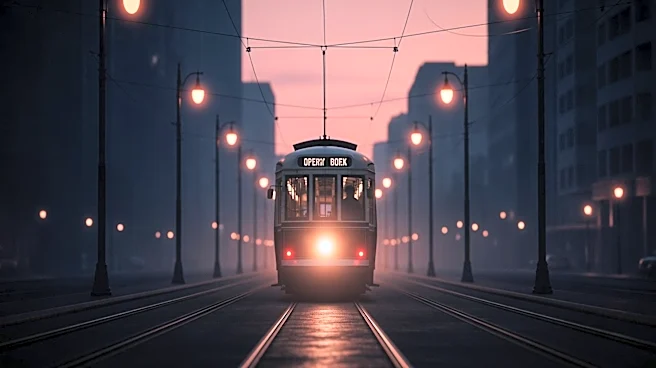








Tennessee Williams' 'A Streetcar Named Desire' is a classic play that has been adapted into various forms, including film and opera. The opera adaptation, composed by André Previn with a libretto by Philip Littell, premiered in 1998 at the San Francisco Opera. This article explores the transformation of 'A Streetcar Named Desire' from stage to opera and the significance of this adaptation.
The Opera's Premiere and Reception
The opera version of 'A Streetcar Named Desire' premiered at
the San Francisco Opera in 1998, conducted by André Previn and directed by Colin Graham. The production featured sets by Michael Yeargan and quickly became one of the most widely performed contemporary operas. The opera was released on CD and DVD, allowing it to reach a broader audience beyond the opera house.
Critics praised the opera for its ability to capture the emotional intensity of Williams' play. Bernard Holland of The New York Times noted that the opera sang very well, with Previn's music flattering and coaxing the voices gracefully from one musical episode to the next. The opera's ability to translate the dramatic tension and character dynamics of the play into a musical format was a testament to Previn's skill as a composer.
Musical and Dramatic Elements
The opera adaptation of 'A Streetcar Named Desire' incorporated a variety of musical styles, including angry clashes of harmony and key, Straussian gestures, and popular melodies. Previn was not afraid to use Hollywood-style musical elements, such as the wailing thrusts of saxophone, trumpet, and clarinet, to introduce themes of dissolution and lurid sex.
The opera's libretto closely followed the original play, as required by the Williams estate, which ensured that the dramatic integrity of the story was maintained. However, some critics felt that the lengthy libretto and music did not advance the characters or action as effectively as the original play. Despite these criticisms, the opera succeeded in bringing a new dimension to the story, allowing audiences to experience the narrative through a different artistic lens.
Global Performances and Legacy
Since its premiere, the opera has been performed in various locations worldwide, including Switzerland, Germany, Italy, and Japan. In 2017, the opera was performed in German for the first time at the Theatre of West Pomerania, showcasing its adaptability to different languages and cultural contexts.
The opera adaptation of 'A Streetcar Named Desire' has contributed to the play's legacy by expanding its reach and allowing it to be appreciated in a new artistic form. As the opera continues to be performed globally, it reinforces the timeless appeal of Williams' story and the universal themes of desire, mental illness, and societal conflict.