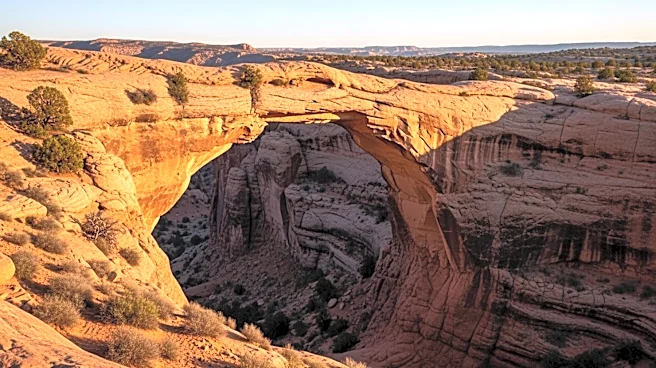








Natural Bridges National Monument, located in southeastern Utah, is not only a site of natural beauty but also of historical and cultural importance. Established in 1908, it was the first national monument in Utah, designated by President Theodore Roosevelt. The area has been inhabited by humans for thousands of years, with evidence of early human activity dating back to 7500 BCE. This rich history, combined with its stunning natural features, makes
the monument a significant cultural landmark.
Early Human Inhabitants
The area around Natural Bridges has been home to humans for millennia. Archaeological evidence, such as rock art and stone tools, indicates that humans have lived in the region since as early as 7500 BCE. Around 700 CE, ancestors of the modern Puebloan people settled in the area, constructing stone and mortar buildings and granaries. These structures share similarities with those found in Mesa Verde National Park, suggesting a connection between the two regions.
The Puebloan people thrived in the area until around 1270, when they mysteriously left the region. The reasons for their departure remain unclear, but it is believed to be related to environmental changes or resource depletion. Today, visitors to the monument can see remnants of these ancient structures, offering a glimpse into the lives of the area's early inhabitants.
European Exploration and Designation
The first Europeans to visit the area were gold prospectors in 1883, led by Cass Hite. Hite followed White Canyon upstream from the Colorado River and discovered the natural bridges near the junction of White and Armstrong canyons. The bridges gained national attention in 1904 when they were featured in the National Geographic Magazine.
In 1908, President Theodore Roosevelt designated the area as a national monument, making it Utah's first. The designation aimed to protect the unique geological formations and the cultural heritage of the region. Despite its status, the monument remained relatively inaccessible for many years, with visitors requiring a three-day horseback ride from the nearest settlement, Blanding, Utah.
Modern Developments and Conservation
The monument's accessibility improved significantly after the uranium boom of the 1950s, which led to the construction of new roads in the area. The paving of Utah State Route 95 in 1976 further increased visitation, allowing more people to experience the monument's natural and cultural wonders.
Today, Natural Bridges National Monument is recognized for its efforts in conservation and sustainability. The monument is powered entirely by a solar array, reducing its environmental impact. In 2007, it was named the first International Dark-Sky Park, highlighting its commitment to preserving the natural night sky.
Natural Bridges National Monument stands as a testament to the region's rich history and cultural significance. Its preservation ensures that future generations can continue to explore and appreciate the area's unique natural and historical features.