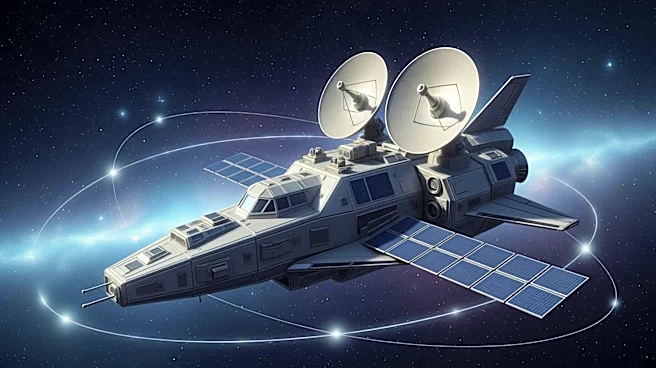




Pioneer 11, a NASA space probe, marked a significant milestone in space exploration. Launched in 1973, it was designed to study the outer Solar System, including the asteroid belt, Jupiter, and Saturn. This article delves into the historical journey of Pioneer 11, highlighting its achievements and the legacy it left behind.
Launch and Early Mission Objectives
Pioneer 11 was launched on April 5, 1973, from Cape Canaveral, Florida. It was part of a mission to explore the outer Solar System,
following its twin, Pioneer 10. The mission aimed to study the interplanetary medium beyond Mars, investigate the asteroid belt, and explore the environment of Jupiter. These objectives were crucial in understanding the potential hazards for future missions to the outer planets.
The spacecraft was equipped with a variety of scientific instruments to achieve these goals. It was the second probe to fly through the asteroid belt and the second to fly by Jupiter. The mission's success in navigating these regions provided valuable data that informed the planning of subsequent missions, such as the Voyager program.
Encounter with Jupiter and Saturn
Pioneer 11's encounter with Jupiter occurred in November and December 1974. During its closest approach, it passed just above the cloud tops of Jupiter, capturing detailed images of the Great Red Spot and the polar regions. This flyby also allowed the probe to use Jupiter's gravity to alter its trajectory towards Saturn, gaining the necessary velocity for the next phase of its mission.
In September 1979, Pioneer 11 became the first spacecraft to visit Saturn. It passed within 21,000 kilometers of Saturn's cloud tops, providing unprecedented data on the planet's rings and moons. The probe's images revealed the dark gaps in Saturn's rings and discovered new moons, contributing significantly to our understanding of the Saturnian system.
Legacy and Final Communication
Pioneer 11's mission extended beyond its encounters with Jupiter and Saturn. It continued to travel outward, becoming one of the first human-made objects to leave the Solar System. By 1995, the spacecraft could no longer power its detectors, leading to the end of its mission. The last routine contact with Pioneer 11 was on September 30, 1995, with the final good engineering data received in November of the same year.
The legacy of Pioneer 11 lies in its role as a trailblazer for future space exploration. It provided critical data that shaped our understanding of the outer planets and paved the way for missions like Voyager. Pioneer 11's journey exemplifies the spirit of exploration and the quest for knowledge that drives space exploration today.