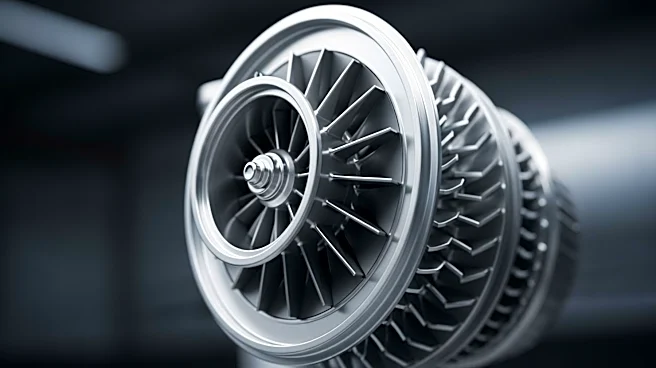




Turbochargers have revolutionized the way engines perform, offering increased power and efficiency. This journey began in the early 20th century and has seen significant advancements over the decades. From their initial use in aircraft to their widespread application in automobiles, turbochargers have become a staple in engine technology.
Early Innovations and Challenges
The concept of turbocharging was first patented in 1905 by Alfred Büchi, a Swiss engineer. His design aimed to
overcome the power loss experienced by aircraft engines at high altitudes due to decreased air density. However, the initial prototypes were not reliable enough for production. Despite these early setbacks, the potential of turbochargers was clear, and further developments continued.
In 1916, French inventor Auguste Rateau applied for a patent for turbochargers intended for use on Renault engines in French fighter planes. Around the same time, the National Advisory Committee for Aeronautics in the United States conducted tests that demonstrated the effectiveness of turbochargers in maintaining engine power at high altitudes. These early efforts laid the groundwork for future advancements in turbocharging technology.
Commercial Breakthroughs and Expansion
The first commercial application of a turbocharger occurred in 1924 when Alfred Büchi supervised the delivery of a heavy-duty turbocharger to the Swiss Locomotive and Machine Works. This marked a significant milestone, as turbochargers began to be used in marine, railcar, and large stationary applications. By 1925, Büchi had successfully installed turbochargers on ten-cylinder diesel engines, significantly increasing their power output.
Turbochargers gained further prominence during World War II, with their use in several aircraft engines, including the Boeing B-17 Flying Fortress. The technology continued to evolve, and by the 1950s, automobile manufacturers began exploring turbocharged engines. However, challenges such as turbo lag and bulky designs initially limited their widespread adoption in passenger vehicles.
Modern Applications and Innovations
The 1960s and 1970s saw turbochargers making their way into motorsports, with notable successes in events like the Indianapolis 500. The technology proved its worth in racing, leading to further interest in its application in consumer vehicles. By the 1980s, turbochargers became more common in passenger cars, offering a way to enhance performance without increasing engine size.
Today, turbochargers are a key component in both diesel and petrol engines, providing improved fuel efficiency and power. Innovations such as variable-geometry turbochargers and electrically-assisted turbochargers have further enhanced their performance, reducing turbo lag and increasing responsiveness. As automotive technology continues to advance, turbochargers remain at the forefront, driving the evolution of engine performance and efficiency.