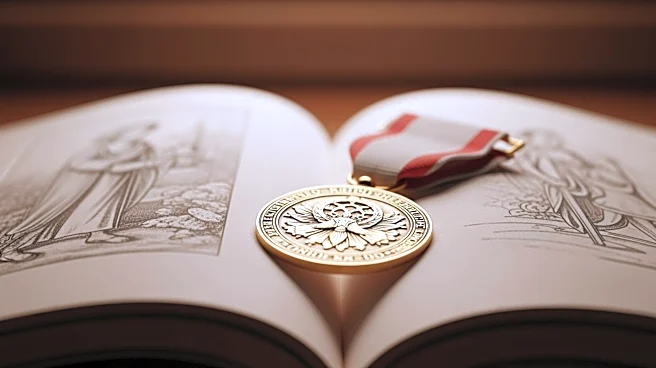







The Caldecott Medal, awarded annually to the illustrator of the most distinguished American picture book for children, has a rich history that dates back to 1938. Named after the English illustrator Randolph Caldecott, this prestigious award has undergone several changes over the years, reflecting shifts in the literary and cultural landscape. This article delves into the historical development of the Caldecott Medal, highlighting key changes and milestones
that have shaped its evolution.
The Inception of the Caldecott Medal
The idea for the Caldecott Medal was first proposed by Frederic G. Melcher in 1937, following the success of the Newbery Medal. Melcher, a former editor of Publishers Weekly, suggested the award to honor the illustrator who created the most distinguished picture book of the year. The American Library Association (ALA) adopted this suggestion, and the first Caldecott Medal was awarded in 1938. The medal itself, designed by Rene Paul Chambellan, features illustrations by Randolph Caldecott, symbolizing the award's dedication to excellence in children's book illustrations.
Initially, the same committee judged both the Newbery and Caldecott awards, and books could be considered for either. However, this changed in 1977 when separate committees were formed for each award. This separation allowed for a more focused evaluation of the unique qualities of picture books, distinct from other children's literature.
Changes and Developments Over the Years
Since its inception, the Caldecott Medal has seen several changes in its awarding process. One significant change occurred in 1971 when the term "Honor" was introduced for runner-up books, a designation that was applied retroactively. This change acknowledged the merit of books that, while not winning the medal, still demonstrated exceptional quality in illustration.
Another notable development was the eligibility criteria. Initially, a previous winner could only win again by unanimous vote, a rule that was relaxed in 1958. In 1963, the possibility of joint winners was introduced, allowing for more flexibility in recognizing outstanding works. These changes reflect the evolving nature of the award and its commitment to recognizing excellence in children's book illustrations.
The Impact of the Caldecott Medal
The Caldecott Medal has had a significant impact on the field of children's literature. Winning the award can lead to a substantial increase in book sales, elevating the prominence of illustrators and publishers alike. The award has helped establish publishers like Bradbury Press and Roaring Brook Press as important players in the industry.
Moreover, the Caldecott Medal has played a role in drawing American artists into the field of children's books, contributing to the development of the modern picture book. The recognition of illustrators such as Marcia Brown and David Wiesner, who have won multiple medals, underscores the award's influence in highlighting artistic talent.
In conclusion, the Caldecott Medal has evolved significantly since its inception, adapting to changes in the literary world while maintaining its core mission of recognizing distinguished illustrations in children's picture books. Its impact on the industry and its role in promoting artistic excellence continue to make it a cornerstone of American children's literature.