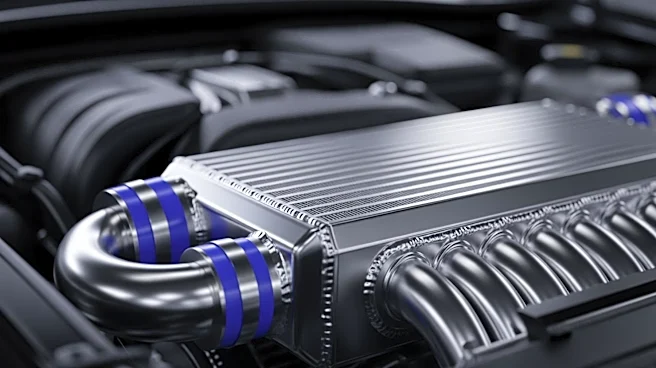

Intercoolers have become an essential part of modern automotive engineering, particularly in vehicles equipped with turbocharged engines. By cooling the compressed air before it enters the engine, intercoolers
enhance performance, efficiency, and reliability. This article explores the importance of intercoolers in today's automotive industry and their impact on engine design.
Enhancing Engine Performance
The primary function of an intercooler is to cool the air compressed by the turbocharger, increasing its density and allowing more oxygen to enter the engine. This process boosts combustion efficiency, resulting in greater power output and improved fuel economy. Intercoolers help engines achieve higher performance levels without increasing their size, making them a vital component in the design of compact, powerful vehicles.
In turbocharged engines, the rapid compression of air raises its temperature, which can lead to reduced air density and limited engine performance. Intercoolers counteract this effect by cooling the air, ensuring that the engine receives a sufficient supply of oxygen for optimal combustion. This not only enhances power but also reduces the risk of pre-combustion, which can damage engine components.
Intercoolers in Automotive Design
Intercoolers are strategically integrated into the design of modern vehicles to maximize their cooling efficiency. Typically, they are positioned between the turbocharger and the engine, with their cooling systems located at the front of the vehicle or under the hood. This placement allows intercoolers to benefit from airflow, ensuring effective heat exchange and optimal engine performance.
The choice between air-to-air and air-to-water intercoolers depends on the specific requirements of the vehicle. Air-to-air intercoolers are favored for their simplicity and cost-effectiveness, making them suitable for most civilian vehicles. In contrast, air-to-water intercoolers offer superior cooling capabilities, making them ideal for high-performance applications where maximum engine efficiency is crucial.
The Impact of Intercoolers on Automotive Technology
The introduction of intercoolers in the automotive industry has revolutionized engine design, allowing manufacturers to produce smaller, more efficient engines without sacrificing power. This has led to the development of high-performance vehicles that are both compact and fuel-efficient, meeting the demands of modern consumers.
Intercoolers have also contributed to the reduction of manufacturing costs by enabling the use of smaller engines with enhanced power output. As a result, they have become a standard component in turbocharged vehicles, playing a significant role in the evolution of automotive technology. Their ability to improve engine performance and reliability makes them indispensable in the design of contemporary vehicles.