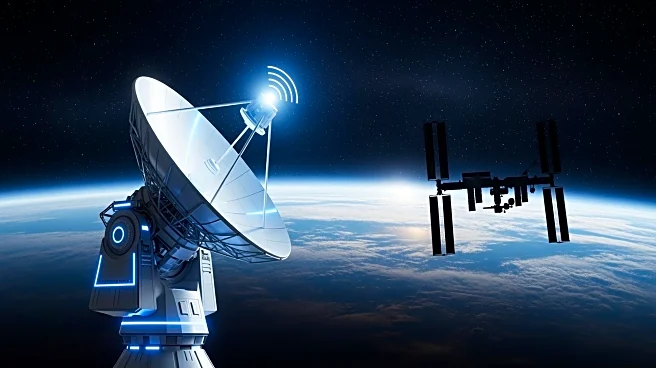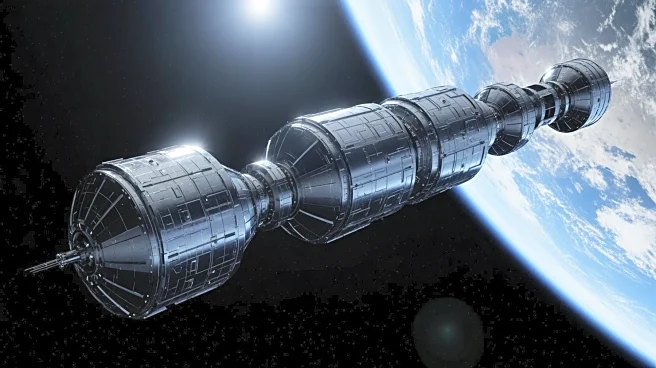




The International Space Station (ISS) stands as a testament to what can be achieved when nations come together for a common goal. This massive space station, orbiting Earth at an altitude of 400 kilometers, is the result of a collaboration between five major space agencies: NASA, Roscosmos, ESA, JAXA, and CSA. The ISS is not only a hub for scientific research but also a symbol of international cooperation in space exploration.
The Framework of Cooperation
The ISS is the most politically
and legally complex space exploration program in history, involving five space programs and fifteen countries. The foundation for this cooperation was laid with the 1998 Space Station Intergovernmental Agreement, which established the primary framework for international collaboration. This agreement was crucial in setting the stage for the construction and operation of the ISS, ensuring that all parties had a clear understanding of their roles and responsibilities.
Subsequent agreements have addressed various aspects of the station's operation, from jurisdictional issues to a code of conduct for astronauts. These agreements have been essential in maintaining a harmonious working relationship among the participating countries, allowing the ISS to function smoothly as a shared resource for scientific research and exploration.
Contributions from Around the World
Each of the five space agencies involved in the ISS has made significant contributions to its construction and operation. The station is divided into two main sections: the Russian Orbital Segment (ROS) and the US Orbital Segment (USOS). The ROS, developed by Roscosmos, includes modules like Zvezda, which provides essential living quarters and life-support systems. The USOS, built by NASA, ESA, JAXA, and CSA, includes modules like Destiny, a primary research facility for U.S. experiments.
The collaboration extends beyond the construction of the station. Each agency contributes to the station's maintenance, scientific research, and crew rotations. This shared responsibility ensures that the ISS remains a vibrant center for scientific discovery and international cooperation.
Challenges and Future Prospects
Despite the success of the ISS, the collaboration has not been without its challenges. Political tensions, such as those arising from the 2022 Russian invasion of Ukraine, have raised questions about the future of international cooperation on the ISS. However, the station continues to operate as a symbol of what can be achieved when countries work together.
Looking ahead, the ISS is expected to remain operational until the end of 2030. Plans are already in place for its de-orbiting, but the legacy of the ISS will continue to inspire future generations of scientists and explorers. The station has paved the way for future international collaborations in space, demonstrating that when nations unite for a common purpose, the possibilities are limitless.