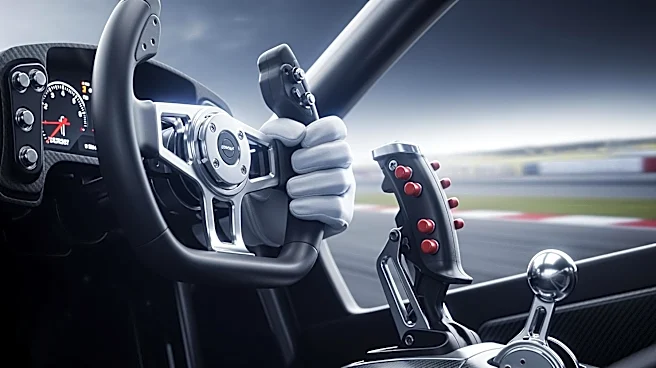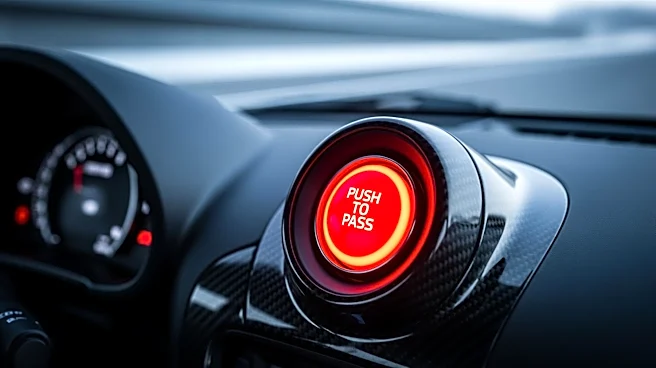


Push-to-pass systems have revolutionized the world of auto racing by providing drivers with the ability to temporarily boost their car's power, making overtaking easier and races more exciting. This feature, typically activated via a button on the steering wheel, has been adopted by several racing series over the years, each with its own unique implementation.
Early Adoption and Mechanisms
The concept of push-to-pass systems first gained traction in the former Champ Car series,
where it was introduced to enhance the competitiveness of races. The system allows drivers to increase their car's power for short periods, often by changing engine modes or utilizing energy stored in an extra battery. This temporary boost is designed to facilitate overtaking, adding a strategic element to races.
Over time, other racing series began to adopt similar systems. The A1GP series, for instance, implemented a version known as PowerBoost. Audi Sport TT Cup followed suit in 2015, integrating push-to-pass into their races to increase excitement and overtaking opportunities. The system's versatility is evident in its various forms, with each series tailoring it to fit their specific needs and regulations.
IndyCar and Super Formula Innovations
IndyCar has been a prominent user of push-to-pass systems, referring to it as the "overtake button." In non-oval races, drivers are allocated between 150 and 200 seconds of extra power per race, which they can use at their discretion to attempt passes, defend positions, or improve lap times. This allocation can be activated for up to 20 seconds at a time, ensuring strategic use throughout the race.
Super Formula adopted a similar system in 2021, known as the Overtake System (OTS). Each driver is given up to 200 seconds of OTS, with a mandatory cooldown period between uses. This system mirrors IndyCar's approach, emphasizing strategic deployment to maximize race performance.
Formula Regional EU and Formula E Variations
The Formula Regional European Championship introduced push-to-pass in 2022, allowing drivers five presses of the button per race, with each activation providing up to 15 seconds of additional engine performance. This system is reset if a race is red-flagged and restarted, adding a layer of complexity to race strategy.
Formula E has experimented with different forms of power boosts, such as Fanboost and Attack Mode. Fanboost allowed fans to vote for their favorite driver to receive an extra power boost, while Attack Mode required drivers to pass through a designated area to activate the boost. These variations highlight the adaptability of push-to-pass systems across different racing formats.
Push-to-pass systems continue to evolve, offering drivers new ways to strategize and compete. As technology advances, these systems are likely to become even more integral to the racing experience, enhancing both the spectacle and the skill required to succeed.