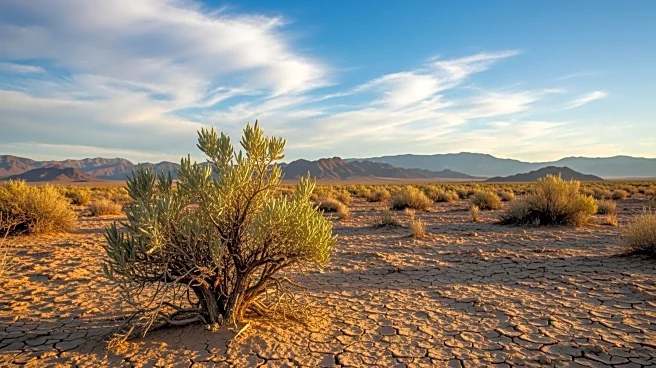




The Great Basin Desert, located in the western United States, is a fascinating region with a climate that sets it apart from other deserts. Unlike the hot, arid deserts typically associated with the American Southwest, the Great Basin Desert experiences a temperate climate with significant seasonal variations. This article delves into the unique climatic features of the Great Basin Desert, highlighting its hot summers, cold winters, and the factors
that contribute to its distinct weather patterns.
Seasonal Extremes
The Great Basin Desert is characterized by its extreme seasonal temperature variations. Summers in the desert are hot and dry, with temperatures often soaring above 90°F (32°C) during the day. However, the nights can be much cooler, with temperatures dropping significantly. This diurnal temperature variation is a hallmark of the desert's climate, influenced by its high elevation and clear skies that allow heat to escape rapidly after sunset.
Winters in the Great Basin Desert are cold and snowy, a stark contrast to the scorching summers. The desert's high elevation contributes to these cold temperatures, with many areas experiencing snowfall. This makes the Great Basin Desert unique among North American deserts, as it is the only one where snow is a common occurrence. The cold winters are a result of the desert's location between mountain ranges, which trap cold air and create a frigid environment.
The Rain Shadow Effect
A significant factor influencing the climate of the Great Basin Desert is the rain shadow effect. The desert is situated between the Sierra Nevada and the Rocky Mountains, which play a crucial role in its arid conditions. As moist air from the Pacific Ocean moves eastward, it is forced to rise over the Sierra Nevada. This process causes the air to cool and lose moisture as precipitation on the western slopes of the mountains.
By the time the air descends into the Great Basin Desert, it is dry, having lost most of its moisture. This rain shadow effect results in the desert receiving minimal precipitation, averaging only 9 to 12 inches annually. The lack of moisture contributes to the desert's arid conditions and sparse vegetation, further defining its unique climate.
Influence of Elevation
Elevation plays a significant role in shaping the climate of the Great Basin Desert. The desert's topography is characterized by wide valleys and parallel mountain ranges, with elevations ranging from 3,900 feet in the valleys to over 9,800 feet at the peaks. This variation in elevation leads to diverse microclimates within the desert.
Higher elevations tend to be cooler and receive more precipitation, supporting different plant and animal communities compared to the lower, drier valleys. The presence of these microclimates adds to the ecological diversity of the Great Basin Desert, making it a unique and complex environment. The interplay of elevation, precipitation, and temperature creates a mosaic of habitats that support a wide range of species adapted to the desert's challenging conditions.