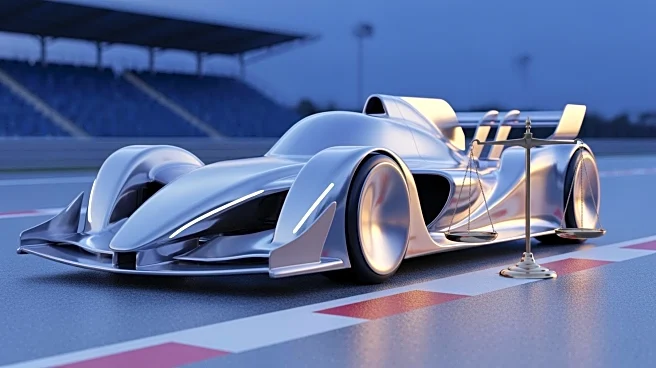

The FIA GT3 European Championship was notable for its use of performance balancing to ensure fair competition among a diverse range of cars. This approach was central to the series' identity, allowing amateur racers to compete on a level playing field. Performance balancing involved adjusting various aspects of the cars to prevent any single manufacturer from dominating the competition.
Methods of Performance Balancing
Performance balancing in the FIA GT3 European Championship was
achieved through a combination of pre-season and in-season adjustments. The FIA and SRO worked together to regulate the performance of the cars, focusing on factors such as horsepower, weight, engine management, and aerodynamics. These adjustments were designed to equalize the cars' capabilities, ensuring that races were determined by driver skill rather than technical superiority.
The series employed handicap weights and other measures to balance the performance of different car models. This allowed a wide variety of vehicles to compete, from high-power, high-weight models like the Mercedes-Benz SLS AMG to low-power, low-weight models like the Porsche 911 GT3. By maintaining a similar power-to-weight ratio across all cars, the championship ensured that no single manufacturer could gain an unfair advantage.
Impact on Competition
The use of performance balancing had a significant impact on the competition within the FIA GT3 European Championship. It allowed for close racing and unpredictable outcomes, as drivers had to rely on their skills rather than the technical advantages of their cars. This approach made the series more exciting for both participants and spectators, as races were often decided by small margins.
Performance balancing also encouraged manufacturers to participate in the championship, as it provided a fair platform for showcasing their vehicles. The series attracted a diverse range of cars, including models from Audi, Ferrari, and Alpina, each competing on equal terms. This diversity added to the appeal of the championship, drawing in fans from different automotive backgrounds.
Legacy of Performance Balancing
The legacy of performance balancing in the FIA GT3 European Championship continues to influence motorsport today. The series demonstrated that competitive racing could be achieved without sacrificing fairness, setting a precedent for other championships to follow. Many modern racing series have adopted similar balancing techniques, ensuring that competition remains open and accessible.
Although the FIA GT3 European Championship concluded in 2012, its approach to performance balancing remains relevant. The series showed that with careful regulation, a diverse range of cars could compete fairly, enhancing the overall experience for drivers and fans alike. This legacy of fairness and competition continues to shape the motorsport industry, promoting inclusivity and excitement in racing.