





The Bronx–Whitestone Bridge stands as a testament to engineering innovation and design. Spanning the East River, this suspension bridge connects the Bronx and Queens, serving as a crucial link in New York City's transportation network. This article explores the engineering aspects and structural features that make the Bronx–Whitestone Bridge an impressive feat of construction.
Design and Construction
The Bronx–Whitestone Bridge was designed by Othmar Ammann, a renowned engineer
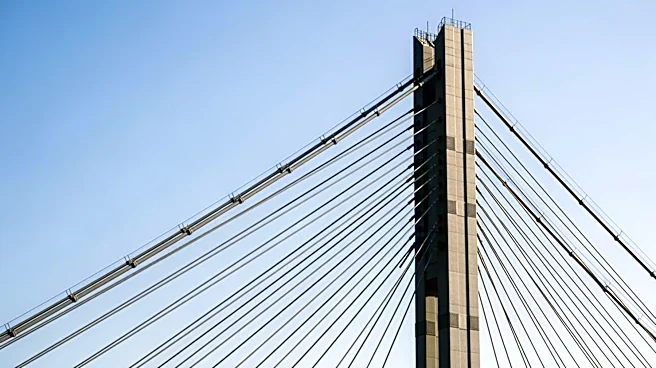
known for his work on several major bridges in New York City. The bridge's design is characterized by its sleek, minimalist structure, which was a hallmark of suspension bridges during that era. The bridge's total length is 1,149 meters, with a main span of 701 meters, making it a significant engineering achievement at the time of its construction.
The bridge's pylons, standing at 115 meters tall, were constructed using prefabricated steel elements, a technique that was innovative for its time. The main cables, each with a diameter of 53.3 centimeters, are composed of thousands of galvanized steel wires, spun together to form strong, durable support for the bridge deck.
Structural Enhancements
Following the collapse of the Tacoma Narrows Bridge in 1940, the Bronx–Whitestone Bridge underwent structural enhancements to ensure its stability. Eight additional cables were added to each tower to provide extra support. These modifications were crucial in preventing the kind of oscillations that led to the Tacoma Narrows disaster.
In 1968, the bridge was temporarily closed after a storm caused it to sway significantly. This incident prompted further reinforcements, including the installation of vibration dampers in 1986 to reduce oscillations and improve stability. The bridge's design has continued to evolve, with aerodynamic modifications made in 2003 to enhance its resilience against wind forces.
Integration and Maintenance
The Bronx–Whitestone Bridge is part of Interstate 678, connecting the Whitestone Expressway in Queens with the Hutchinson River Expressway in the Bronx. This integration into the interstate system required updates to the bridge's approaches, ensuring they met modern highway standards.
The bridge is maintained by MTA Bridges and Tunnels, which oversees its operation and upkeep. As a toll bridge, it generates revenue to support its maintenance, ensuring it remains a safe and reliable crossing for the millions of vehicles that traverse it each year. The Bronx–Whitestone Bridge continues to be a vital component of New York City's infrastructure, showcasing the enduring legacy of its engineering design.