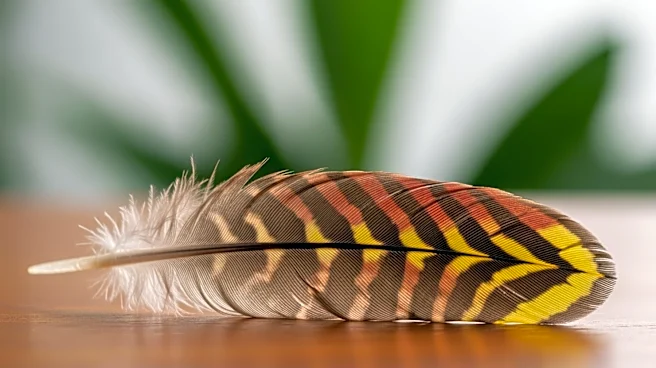





The finch family, Fringillidae, is a diverse group of birds that have captivated scientists and bird watchers alike. Known for their seed-eating habits and colorful plumage, finches have a rich evolutionary history that has shaped their current diversity. This article explores the taxonomy and evolutionary journey of these fascinating birds, highlighting key developments in their classification.
Taxonomy and Classification
The family Fringillidae was first introduced in 1819
by English zoologist William Elford Leach. Since then, the taxonomy of finches has undergone significant revisions, particularly in the classification of cardueline finches. The study of their relationships has been complicated by the convergence of similar morphologies among species occupying similar ecological niches.
In the late 20th century, advances in phylogenetic studies using mitochondrial and nuclear DNA sequences led to substantial changes in the taxonomy of finches. These studies revealed that several groups of birds previously assigned to other families were more closely related to finches. For example, the Neotropical Euphonia and Chlorophonia, once considered part of the tanager family, were reclassified into the finch family based on DNA analysis.
Evolutionary Developments
The evolutionary history of finches is marked by adaptive radiation, particularly in the Hawaiian honeycreepers. These birds, once placed in their own family, were found to be closely related to the Carpodacus rosefinches and are now classified within the Carduelinae subfamily. The Hawaiian honeycreepers are famous for their diverse bill shapes and sizes, which evolved to exploit different food sources in their environment.
Another significant development in finch evolution is the polyphyletic nature of some of the largest genera, such as Carpodacus, Carduelis, and Serinus. These genera were split into monophyletic groups to better reflect their evolutionary relationships. For instance, the American rosefinches were moved from Carpodacus to Haemorhous, and the greenfinches were reclassified into the genus Chloris.
Fossil Record and Historical Context
The fossil record of true finches is sparse, but available evidence suggests that they originated during the Middle Miocene, around 20 to 10 million years ago. Fossil remains from the Messinian age, approximately 12 to 7.3 million years ago, have been found in Hungary, providing insights into the early history of these birds.
The evolutionary journey of finches is a testament to their adaptability and resilience. Their ability to occupy diverse ecological niches and evolve distinct morphological traits has allowed them to thrive across the globe. As phylogenetic studies continue to advance, our understanding of finch evolution will undoubtedly deepen, shedding light on the complex relationships within this remarkable family.
In summary, the evolutionary history of finches is a dynamic and ongoing story. From their early origins to their current diversity, finches have continually adapted to changing environments, making them a fascinating subject for evolutionary biologists and bird enthusiasts alike.