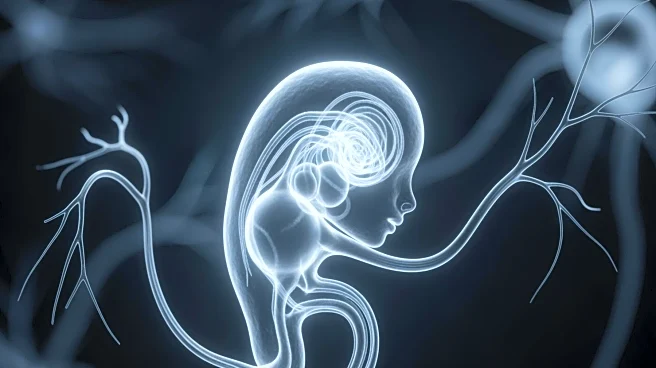




Embryology offers a unique perspective on the evolutionary history of the brain, revealing how processes in embryonic development are conserved across species. By studying embryos, scientists can uncover similarities that indicate evolutionary connections and gain a deeper understanding of brain evolution.
Conserved Growth Factors
Embryology allows researchers to track growth factors like Bone Morphogenetic Protein (BMP) and Sonic Hedgehog (SHH), which play significant roles
in neural development. These factors are highly conserved among vertebrates, providing insights into the evolutionary divergence of brain regions.
Varying levels of these growth factors lead to different embryonic neural development, affecting the complexity of future neural systems. By studying embryonic stages across species, scientists can identify evolutionary changes and explore links to neural network diversity and genetic factors.
Orthologs and Evolutionary Connections
Orthologs, homologous genes between species that are evolutionarily related, are crucial for understanding brain evolution. By observing orthologs, researchers can identify evolutionary connections and track changes in brain development.
Embryology helps scientists study the evolution of the brain by comparing anatomical features and genetic components. This approach provides a comprehensive view of how brain structures have evolved and adapted over time.
Implications for Brain Complexity
The study of embryology reveals how evolutionary changes in the brain have led to increased complexity. As new neural network formations and genetic selections occur, the brain's ability to process information and perform higher cognitive functions expands.
Embryology highlights the intricate orchestration of brain development, showing how neurons migrate and form synaptic connections. This process is crucial for understanding how the brain has evolved to support complex behaviors and cognitive abilities.