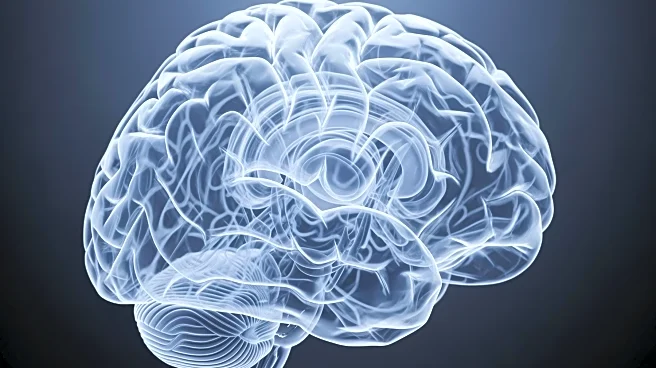




The frontal lobe is a fascinating part of the human brain, known for its role in complex cognitive functions. As the largest lobe of the vertebrate brain, it occupies the most anterior position in the cerebral hemispheres. This article delves into the anatomical structure of the frontal lobe, highlighting its subdivisions and their respective functions.
Structural Overview
The frontal lobe is separated from the parietal lobe by the central sulcus and from the temporal
lobe by the lateral sulcus. These anatomical grooves are crucial in defining the boundaries of the frontal lobe. The frontal pole, located at the most anterior ventral end, is one of the three poles of the cerebrum, marking the extreme front of the brain.
The outer surface of the frontal lobe, known as the frontal cortex, is a thin layer of gray matter. This cortex is further divided into several anatomical and functional structures, including the motor cortex and the prefrontal cortex. The motor cortex itself is subdivided into the premotor cortex, nonprimary motor cortex, and primary motor cortex, each playing a role in controlling voluntary movements.
Gyri and Their Functions
Within the frontal lobe, there are four principal gyri. The precentral gyrus, located directly anterior to the central sulcus, contains the primary motor cortex responsible for voluntary movements. The superior, middle, and inferior frontal gyri are horizontally arranged, each contributing to different aspects of cognitive and motor functions.
The inferior frontal gyrus is particularly interesting as it is subdivided into the orbital, triangular, and opercular parts. Functionally, this gyrus is known as the ventrolateral prefrontal cortex, which is involved in complex processes such as language production and social behavior.
Dopaminergic Pathways
The frontal lobe houses most of the dopaminergic neurons in the cerebral cortex. These neurons are part of pathways associated with reward, attention, short-term memory, planning, and motivation. Dopamine plays a crucial role in limiting and selecting sensory information from the thalamus to the forebrain, influencing how we perceive and react to stimuli.
Understanding the anatomy of the frontal lobe provides insight into its complex functions and its importance in human cognition. The intricate structure and subdivisions of the frontal lobe highlight its role in various executive functions, making it a key area of study in neuroscience.