






The Battle of Columbus, fought on April 16, 1865, holds a unique place in American history as the last major land battle of the Civil War. Occurring in Girard, Alabama, and Columbus, Georgia, this battle marked the end of a significant Union campaign through Alabama and Georgia, known as Wilson's Raid. Led by Major General James H. Wilson, Union forces aimed to dismantle the Confederate manufacturing centers, culminating in a Union victory. This article
delves into the events leading up to the battle, the strategic maneuvers during the conflict, and its aftermath.
Prelude to the Battle
The Battle of Columbus was part of a larger Union campaign orchestrated by Major General James H. Wilson. Following the Union victory at the Battle of Nashville in December 1864, Wilson was tasked with marching into the Deep South to destroy Confederate supply centers. His journey began on March 22, 1865, from Gravelly Springs, Alabama, targeting Selma and Columbus as key objectives.
The Battle of Selma, fought on April 2, 1865, was a precursor to Columbus. Despite being outnumbered, Confederate Lt. Gen. Nathan Bedford Forrest inflicted heavy casualties on Union forces. However, Wilson's troops eventually captured Selma, destroying military supplies and looting the city before advancing toward Columbus.
The Battle Unfolds
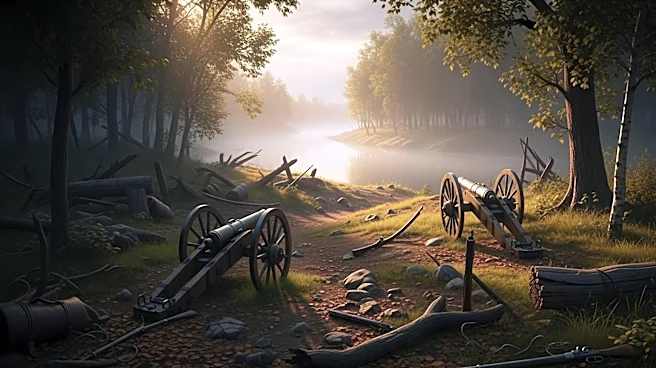
On April 16, 1865, Union forces arrived at Girard, Alabama, initiating the Battle of Columbus. Confederate Major General Howell Cobb, aware of the impending attack, had prepared defenses on the western side of the Chattahoochee River. Cobb's strategy focused on controlling two covered bridges connecting Girard to Columbus, crucial for Union access.
The battle began with Union General Emory Upton's division attacking the lower bridge, only to retreat after encountering a Confederate trap. As night fell, Union forces shifted their focus to the upper bridge. Despite the darkness, both Union and Confederate soldiers raced across the bridge, with Confederate General Robert Toombs withholding cannon fire to avoid friendly casualties.
Aftermath and Legacy
The day after the battle, Union forces destroyed Confederate resources in Columbus, including the ironclad CSS Muscogee. The Union victory at Columbus paved the way for Wilson's troops to advance to Macon, Georgia, capturing key Confederate figures.
While some debate whether Columbus was the last battle of the Civil War, its significance as the final major military engagement is widely recognized. The battle's impact on the Confederate war effort was profound, marking the end of organized resistance in the region and contributing to the broader conclusion of the Civil War.