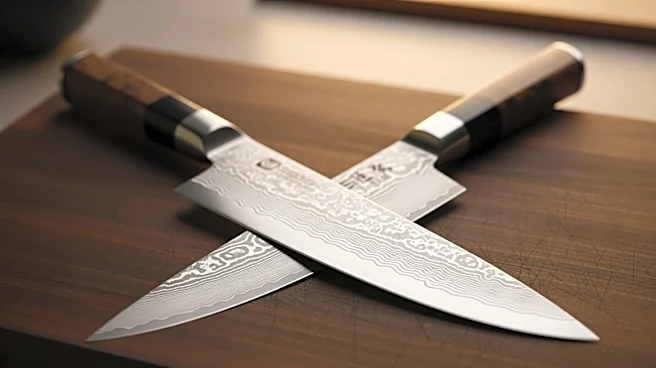


Chef's knives are a fundamental tool in kitchens worldwide, but their design and use can vary significantly between Western and Japanese styles. This article compares these two distinct approaches, highlighting the differences in blade shape, construction, and culinary applications.
Western Chef's Knives
Western chef's knives, often referred to as cook's knives, are characterized by their broad, sturdy blades. Typically, a Western chef's knife has a blade length of about
20 centimeters (8 inches), though sizes can range from 15 to 36 centimeters. The blade is designed to handle a variety of tasks, from slicing meat to chopping vegetables, making it a versatile tool in the kitchen.
The construction of Western chef's knives often involves either forged or stamped blades. Forged blades are crafted through a process of heating and hammering steel, resulting in a full-tang design that provides balance and strength. Stamped blades, on the other hand, are cut from cold rolled steel and are generally more affordable. Despite their differences, both types of blades are designed to perform well in a range of culinary tasks.
Japanese Chef's Knives
Japanese chef's knives, known as gyuto or santoku, differ from their Western counterparts in several ways. Japanese knives are often lighter and have a thinner blade, which allows for more precise cuts. The blade shape is typically more curved, facilitating a rocking motion during chopping.
Japanese knives are traditionally single-beveled, meaning they are sharpened on one side only. This design allows for extremely sharp edges, ideal for delicate tasks like slicing fish or vegetables. The handles of Japanese knives are usually made from wood and are friction-fitted to a hidden tang, providing a comfortable grip.
Culinary Applications
The choice between Western and Japanese chef's knives often depends on the type of cuisine being prepared. Western knives are well-suited for tasks that require strength and durability, such as cutting through tough meats or dense vegetables. Their robust design makes them a reliable choice for a wide range of kitchen tasks.
Japanese knives, with their sharp edges and lightweight design, excel in tasks that require precision and finesse. They are particularly favored in Japanese cuisine, where delicate slicing and intricate cuts are essential. The choice of knife can significantly impact the preparation and presentation of dishes, making it an important consideration for chefs and home cooks alike.
In conclusion, both Western and Japanese chef's knives offer unique advantages, and the choice between them often comes down to personal preference and culinary needs. Understanding the differences in design and application can help cooks select the right tool for their kitchen.