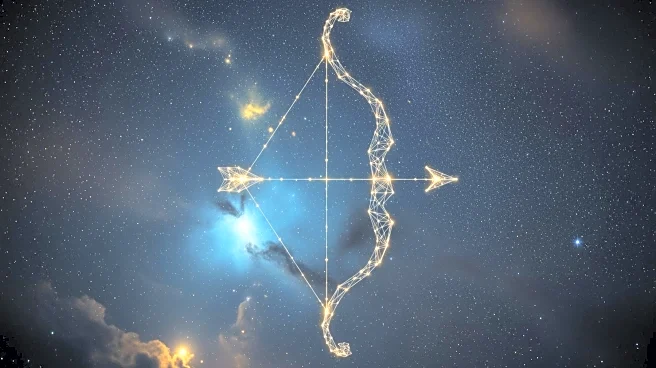

Sagittarius is one of the most recognized constellations in the night sky, known for its distinctive shape and its position in the zodiac. Located in the southern celestial hemisphere, Sagittarius is often depicted as a centaur archer, drawing a bow. This constellation holds a special place in both astronomy and astrology, offering a rich tapestry of stars and celestial phenomena.
The Position and Shape of Sagittarius
Sagittarius is situated between the constellations of Scorpius and Ophiuchus
to the west and Capricornus and Microscopium to the east. Its name, derived from Latin, means "archer," and it is commonly represented as a centaur drawing a bow. The constellation is part of the zodiac, a group of constellations that the Sun appears to move through over the course of a year.
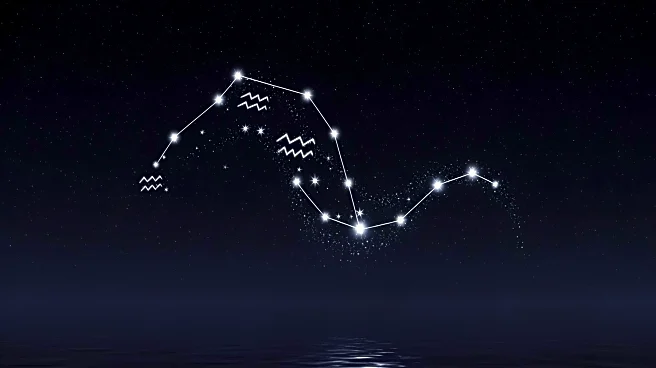
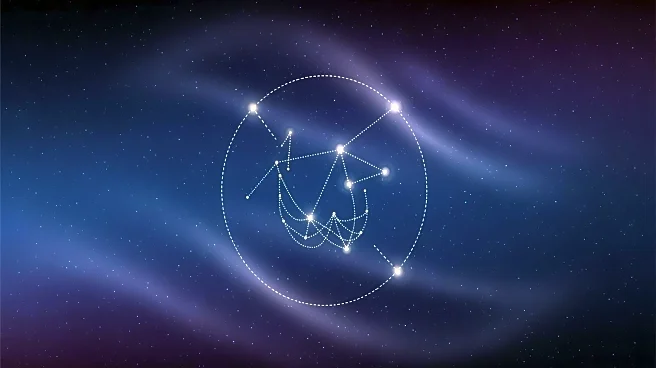
One of the most notable features of Sagittarius is the "Teapot" asterism, formed by its brighter stars. This asterism is easily recognizable in the northern hemisphere's summer skies. The stars that make up the Teapot include Delta Sagittarii (Kaus Media), Epsilon Sagittarii (Kaus Australis), Zeta Sagittarii (Ascella), and others, which together create the shape of a teapot. The Milky Way's dense star clouds appear as "steam" rising from the spout of this celestial teapot.
Sagittarius and the Milky Way
Sagittarius is not only famous for its shape but also for its position in relation to the Milky Way. The center of our galaxy lies in the westernmost part of Sagittarius, marked by the radio source Sagittarius A*. This region is home to a supermassive black hole, which is a focal point for astronomers studying the dynamics of our galaxy.
The constellation is rich with deep-sky objects, including star clusters and nebulae. Notable among these are the Lagoon Nebula (Messier 8) and the Trifid Nebula (Messier 20), both of which are popular targets for amateur astronomers. The dense star fields and nebulae make Sagittarius a fascinating area for stargazing and astrophotography.
Observing Sagittarius
Sagittarius is best viewed during the summer months in the northern hemisphere, when it is a prominent feature of the night sky. However, its visibility varies with latitude. In locations north of 43°N, the constellation may barely rise above the horizon, while in the southern hemisphere, it can appear directly overhead.
The constellation is hidden behind the Sun's glare from mid-November to mid-January, coinciding with the December solstice when the Sun is located in Sagittarius. By March, Sagittarius begins to rise at midnight, and by June, it reaches opposition, allowing it to be seen throughout the night. This makes it a favorite among stargazers during the summer months, offering a glimpse into the heart of our galaxy.