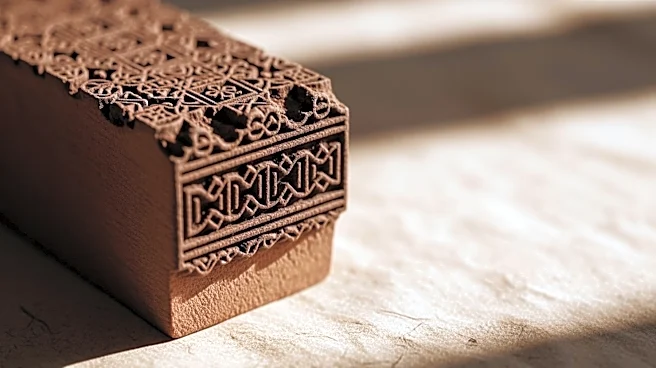







Woodblock printing, a technique for printing text, images, or patterns, has a rich history in East Asia, originating in China. This method involves carving a wooden block to create a relief image, which is then inked and pressed onto paper or textiles. Over centuries, woodblock printing evolved and spread across East Asia, significantly impacting cultural and religious practices.
Early Beginnings in China
Woodblock printing began in China as a method for printing on textiles
before it was adapted for paper. The earliest surviving examples date back to before 220 AD. By the 7th century, during the Tang dynasty, woodblock printing was well-established and became the dominant method for reproducing texts and images. This technique was particularly important for the dissemination of Buddhist texts, which were considered to hold intrinsic value and sacred power.
The Diamond Sutra, printed in 868 AD, is the world's oldest known printed text with a specific date. This milestone highlights the significance of woodblock printing in preserving and spreading religious teachings. The process involved carving intricate designs into wooden blocks, a labor-intensive task that required skilled artisans.
Spread to Korea and Japan
Woodblock printing spread to Korea and Japan, where it was adapted and further developed. In Korea, the Great Dharani Sutra, printed between 704 and 751 AD, is one of the earliest examples. The technique was used to produce religious texts, such as the Tripitaka Koreana, a comprehensive collection of Buddhist scriptures.
In Japan, woodblock printing became popular during the Kamakura period (12th to 13th centuries). The technique was used extensively in Buddhist temples to produce religious texts. By the Edo period, woodblock printing had become a widespread method for producing books and artworks, including the famous ukiyo-e prints. These prints depicted various subjects, from landscapes to kabuki actors, and were highly popular among the Japanese public.
Cultural Impact and Legacy
Woodblock printing had a profound impact on East Asian culture, facilitating the spread of religious and philosophical ideas. It allowed for the mass production of texts, making literature and religious teachings more accessible to the general public. This democratization of knowledge contributed to increased literacy rates and cultural exchange across the region.
The technique also influenced art and design, with woodblock prints becoming a significant art form in their own right. In Japan, ukiyo-e prints became iconic, influencing Western art movements such as Impressionism. Today, woodblock printing remains a celebrated art form, with artists continuing to explore its creative possibilities.