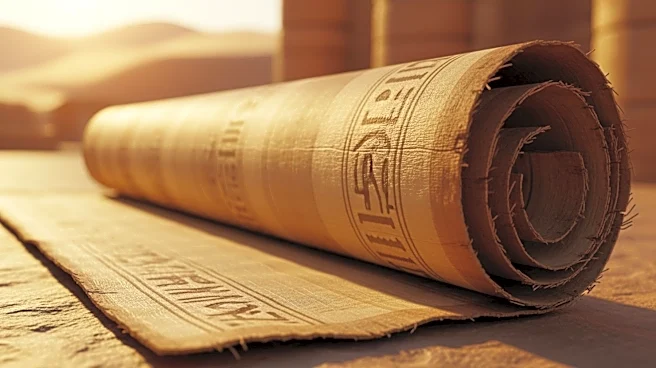

Papyrus was more than just a writing material in ancient Egypt; it was a vital component of the civilization's cultural and historical fabric. Derived from the papyrus plant, this material was used extensively
for writing, crafting, and even in religious practices. Its significance is evident in the wealth of historical documents that have survived to this day, offering a window into the ancient world.
Historical Significance of Papyrus
The use of papyrus dates back to at least the First Dynasty of Egypt, highlighting its long-standing importance. The plant was abundant in the Nile Delta, making it a readily available resource for the Egyptians. Papyrus was used throughout the Mediterranean region, underscoring its widespread influence.
Documents written on papyrus, such as the Egyptian Book of the Dead and various medical and mathematical treatises, have provided crucial insights into ancient Egyptian knowledge and beliefs. These texts are some of the earliest examples of written records, showcasing the advanced state of Egyptian civilization.
Cultural Impact of Papyrus
Papyrus played a significant role in the daily lives of ancient Egyptians. Beyond its use as a writing material, it was employed in the construction of various artifacts, including reed boats, mats, and baskets. The plant's versatility made it an essential resource for both practical and ceremonial purposes.
The cultural impact of papyrus is also evident in its use in religious contexts. Papyrus scrolls were often used to record religious texts and rituals, reflecting the material's sacred status. The durability and portability of papyrus made it an ideal medium for preserving important cultural and religious knowledge.
The Legacy of Papyrus
Although papyrus was eventually supplanted by other materials like parchment and paper, its legacy endures. The documents preserved on papyrus have provided invaluable insights into ancient Egyptian society, from its medical practices to its religious beliefs.
The discovery of papyrus scrolls in the 18th century, such as those found in Herculaneum, sparked renewed interest in ancient Egyptian culture. These discoveries have continued to shape our understanding of the ancient world, highlighting the enduring significance of papyrus as a cornerstone of Egyptian heritage.