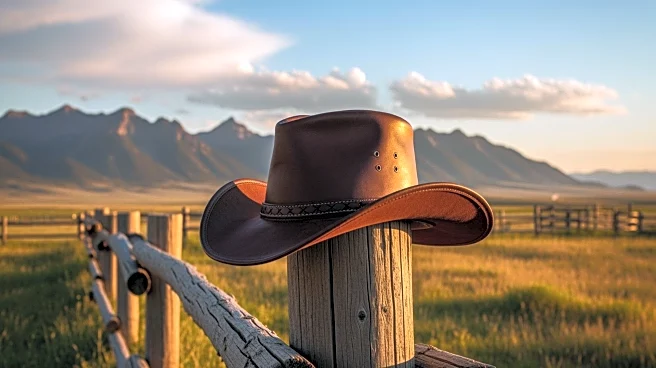




The Goodnight-Loving Trail stands as a monumental achievement in the history of cattle driving, thanks to the efforts of Charles Goodnight and his partner Oliver Loving. This trail, which extended from Texas to Wyoming, played a crucial role in the expansion of the cattle industry in the American West. Goodnight's vision and determination were instrumental in establishing this vital route, which facilitated the movement of cattle across vast distances.
Origins of the Trail
In 1866, Charles Goodnight and Oliver Loving embarked on their first cattle drive from Fort Belknap, Texas, to Fort Sumner, New Mexico. This journey marked the beginning of what would become known as the Goodnight-Loving Trail. The trail crossed 90 miles of the southern portion of the Llano Estacado before reaching the Pecos River at Horsehead Crossing. Goodnight's innovative approach to cattle driving, including the invention of the chuckwagon, ensured that cowboys had the necessary supplies for the arduous journey.
The trail's success was not only due to Goodnight's ingenuity but also his ability to forge partnerships. By establishing contracts with figures like John Wesley Iliff and John Chisum, Goodnight ensured a steady supply of cattle to various locations, including Fort Sumner in the New Mexico Territory. These partnerships were crucial in expanding the reach and impact of the trail.
Expansion and Impact
The Goodnight-Loving Trail was extended into Colorado, where Goodnight and Loving established a contract to provide 30,000 head of longhorn cattle by 1876. This expansion was pivotal in connecting the Texas Panhandle with markets in Colorado and Wyoming, facilitating the growth of the cattle industry in these regions. The trail's significance was further underscored by its role in supplying cattle to the burgeoning markets in the American West.
Goodnight's establishment of the JA Ranch in the Palo Duro Canyon in 1876 marked another milestone in his career. The ranch, which covered over a million acres, became a central hub for cattle operations in the Texas Panhandle. Goodnight's efforts in preserving native plains bison and crossbreeding them with domestic cattle demonstrated his commitment to innovation and conservation.
Legacy of the Trail
The Goodnight-Loving Trail remains a symbol of the pioneering spirit that characterized the American West. Charles Goodnight's contributions to its development are celebrated for their impact on the cattle industry and the expansion of the frontier. His legacy is preserved through the continued recognition of the trail's historical significance and the enduring influence of his innovations in ranching.
Goodnight's induction into the Hall of Great Westerners of the National Cowboy & Western Heritage Museum in 1955 highlights his lasting impact on the region's history. The trail, along with Goodnight's other achievements, continues to be a testament to his vision and dedication to advancing the American West.