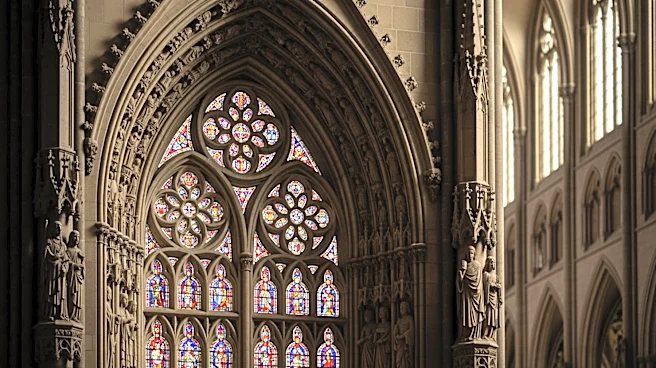



The Basilica of the National Shrine of the Immaculate Conception in Washington, D.C., is not only an architectural marvel but also a historical landmark. Its journey from conception to completion spans decades, marked by significant events and milestones that have shaped its legacy. This article explores the historical timeline of the basilica, highlighting key moments that contributed to its development.
Early Beginnings and Patronage
The idea for the basilica was first proposed
by Bishop Thomas Joseph Shahan, the fourth rector of the Catholic University of America, in 1913. He envisioned a national shrine dedicated to the Immaculate Conception, the principal patroness of the United States. With the support of Pope Pius X, Shahan secured land from the Catholic University for the construction of the shrine. His vision was to create a "monument of love and gratitude" that would stand as a testament to the faith and devotion of its builders.
Construction began in 1920, with the groundbreaking ceremony led by Archbishop Giovanni Bonzano. The foundation stone was blessed by Cardinal James Gibbons, marking the official start of the basilica's construction. Despite initial enthusiasm, the project faced several challenges, including the Great Depression and World War II, which halted progress for many years.
Resumption and Completion
After the war, efforts to complete the basilica resumed under the leadership of Archbishop John Noll and Archbishop Patrick O'Boyle. In 1954, construction of the Great Upper Church was restarted, culminating in its dedication in 1959. This event was attended by thousands of Catholics, including bishops and dignitaries, who gathered to celebrate the completion of this monumental project.
The basilica continued to evolve, with significant additions made in the 21st century. In 2006, work was completed on the mosaic covering the Redemption Dome, followed by the blessing of the Incarnation Dome in 2007. The final architectural element, the Trinity Dome, was completed in 2017, featuring 24 tons of Venetian glass in one of the largest mosaics of its kind.
Cultural and Religious Significance
Throughout its history, the Basilica of the National Shrine of the Immaculate Conception has played a vital role in the cultural and religious landscape of the United States. It has hosted numerous significant events, including papal visits and the canonization of saints. In 1990, Pope John Paul II elevated the shrine to the status of a minor basilica, further cementing its importance.
The basilica serves as a symbol of unity and faith for Catholics across the nation, reflecting the dedication and perseverance of those who contributed to its construction. Its historical journey is a testament to the enduring power of faith and the impact of religious architecture on society.