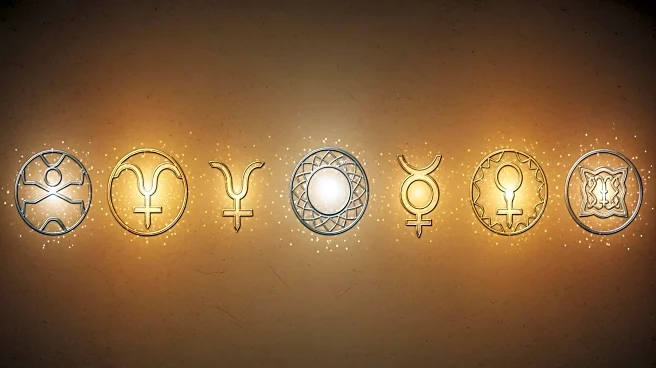

Symbols have long been used to represent the classical planets, serving as a bridge between the celestial and the terrestrial. These symbols, rooted in ancient mythology and astrology, have evolved over
time, reflecting changes in scientific understanding and cultural significance. The classical planets—Sun, Moon, Mercury, Venus, Mars, Jupiter, and Saturn—each have distinct symbols that have been used in various contexts, from alchemy to modern astrology.
Origins of Planetary Symbols
The origins of planetary symbols can be traced back to the attributes given to classical deities. In ancient Rome, the planets were associated with gods, each represented by specific symbols. For example, Mercury was depicted with a caduceus, a staff entwined with serpents, symbolizing communication and commerce. Venus, associated with love and beauty, was represented by a mirror.
These symbols were not only used in religious and astrological contexts but also in alchemy, where they represented the seven metals known to the ancients. The symbols for the planets and metals were often interchangeable, reflecting the belief in a cosmic connection between the celestial and terrestrial realms.
Medieval and Renaissance Developments
During the medieval and Renaissance periods, planetary symbols underwent further development. The symbols were preserved in Byzantine codices and used in horoscopes and astronomical texts. The addition of crosses to some symbols, such as those for Mercury and Venus, was an attempt to Christianize the pagan symbols, reflecting the cultural and religious shifts of the time.
The Renaissance saw a renewed interest in classical knowledge, leading to the revival and refinement of planetary symbols. These symbols were used in various scientific and artistic works, illustrating the planets' influence on human affairs and the natural world. The symbols became more standardized, with the modern forms emerging in the 16th century.
Modern Usage and Significance
Today, planetary symbols continue to be used in astrology, astronomy, and popular culture. In astrology, the symbols represent the planets' influence on personality and destiny, forming the basis of horoscopes and astrological charts. In astronomy, the symbols are used as shorthand for the planets, though their use has declined in favor of more precise scientific notation.
The enduring appeal of planetary symbols lies in their ability to convey complex ideas and connections between the cosmos and human life. They serve as reminders of our shared history and the timeless quest to understand the universe. As symbols of mystery and wonder, the classical planets continue to inspire and captivate, bridging the gap between ancient traditions and contemporary culture.