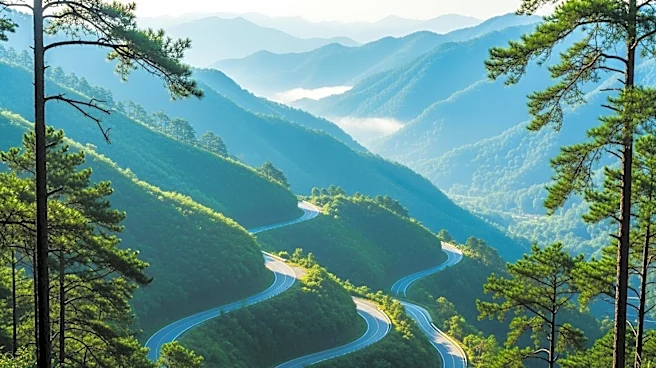






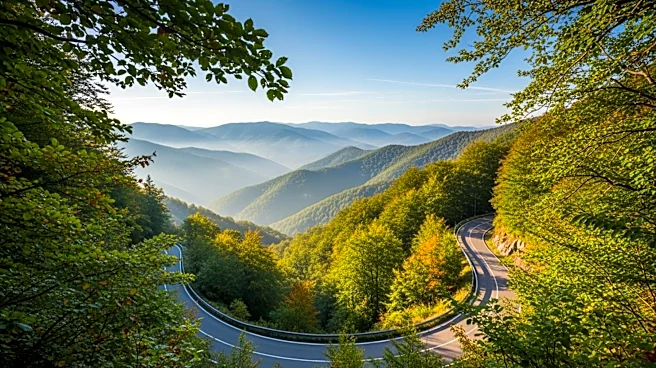
The Blue Ridge Parkway stands as a testament to the vision and efforts of those who sought to create a scenic highway that would connect two of America's most cherished national parks: Shenandoah and Great Smoky Mountains. Its development, which began during the administration of President Franklin D. Roosevelt, was a significant undertaking that spanned over five decades, involving various government agencies and impacting the lives of many residents
in the region.
Origins and Early Planning
The idea for the Blue Ridge Parkway originated in the 1930s as part of the New Deal, a series of programs aimed at providing economic relief during the Great Depression. Initially called the Appalachian Scenic Highway, the parkway was intended to link Shenandoah National Park in Virginia with Great Smoky Mountains National Park in North Carolina. Secretary of the Interior Harold L. Ickes played a crucial role in the planning process, assembling a panel to study potential routes.
Despite recommendations for a route through Tennessee, political influences led to the selection of a path through North Carolina. This decision was influenced by Roosevelt's connections and the efforts of Congressman Robert Doughton, who worked to change the route in exchange for supporting the Social Security Act. The parkway's construction began in 1935 near Cumberland Knob, North Carolina, with work in Virginia starting the following year.
Construction and Challenges
The construction of the Blue Ridge Parkway was a monumental task that involved various New Deal public works agencies, including the Works Progress Administration and the Civilian Conservation Corps (CCC). These agencies provided labor for roadway construction, landscape work, and the development of recreation areas. The CCC, in particular, was instrumental in roadside cleanup, plantings, and improving adjacent fields and forests.
During World War II, CCC crews were replaced by conscientious objectors from the Civilian Public Service program. The parkway's construction created jobs but also displaced residents and imposed new regulations on landowners. The Eastern Band of Cherokee Indians resisted the parkway's passage through their lands, eventually negotiating more favorable terms with the U.S. government.
Completion and Legacy
By 1966, most of the Blue Ridge Parkway was completed, except for the Linn Cove Viaduct around Grandfather Mountain, which opened in 1987. The parkway's construction took over 52 years, reflecting the challenges and complexities of building a scenic highway through mountainous terrain. Despite setbacks, the parkway has become one of the most visited units of the National Park System, offering a unique blend of natural beauty and cultural heritage.
Today, the Blue Ridge Parkway continues to attract millions of visitors annually, providing a scenic route that showcases the Appalachian Mountains' splendor. Its historical significance and impact on the region remain evident, as it serves as a reminder of the collaborative efforts that brought this iconic roadway to life.