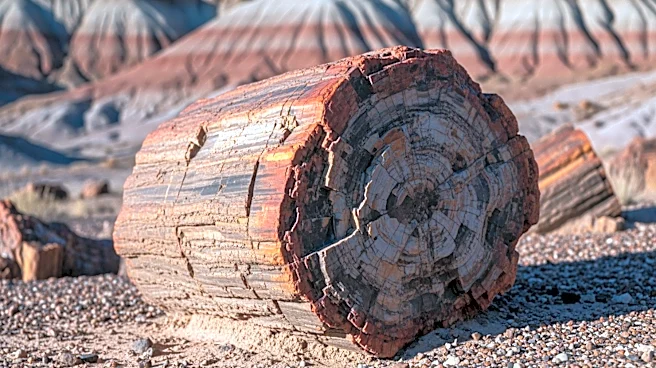







Petrified Forest National Park is not only a geological and paleontological wonder but also a site of great cultural and historical importance. The park has been home to human inhabitants for thousands of years, with more than 1,000 archaeological sites discovered within its boundaries. These sites offer a glimpse into the lives of the park's earliest inhabitants and their descendants, providing valuable insights into the cultural heritage of the region.
Native American Heritage
The earliest human inhabitants of Petrified Forest National Park arrived over 13,000 years ago. These Clovis-era people are the ancestors of Native Americans, and their presence is marked by artifacts such as spear points made from petrified wood. By about 2,500 years ago, Ancestral Pueblo farmers were growing corn and living in subterranean pit houses within the park.
Over time, Ancestral Pueblo communities evolved, constructing above-ground masonry dwellings called pueblos and gathering in large communal buildings known as great kivas. By 1450 CE, these communities migrated to join rapidly growing settlements on the Hopi Mesas and the Pueblo of Zuni, where their descendants still reside today. The park's archaeological sites, including petroglyphs, remain important to these descendant communities, preserving their cultural heritage.
Early Exploration and Settlement
The area that is now Petrified Forest National Park was visited by Spanish explorers in the 16th century, who were searching for routes between Spanish colonies. By the mid-19th century, a U.S. team surveyed an east-west route through the area, noting the presence of petrified wood. This led to increased interest in the region, with roads and railways following similar routes and giving rise to tourism.
The opening of the Atlantic and Pacific Railroad in the early 1880s led to the founding of towns like Holbrook and Adamana. Visitors could stop at the Adamana train station, book a hotel room, and take a tour of the Chalcedony Forest, as the park was then known. This early tourism contributed to the park's cultural significance, attracting visitors from across the country.
Preservation Efforts
Increasing tourist and commercial interest in petrified wood during the late 19th century alarmed residents of the region. In 1895, the Arizona Territorial Legislature asked the U.S. Congress to create a petrified forest national park. Although this initial attempt failed, the Antiquities Act of 1906 was used to establish the Petrified Forest National Monument.
The monument became a national park in 1962, and efforts to preserve its cultural and natural resources continue to this day. The park's rich cultural and historical heritage makes it a vital location for understanding the region's past and the people who have called it home.