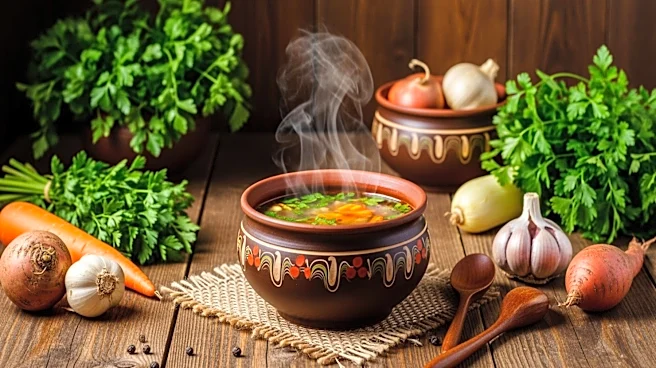








Soups hold a special place in Russian cuisine, serving as a staple in the diet and a reflection of the country's culinary heritage. From traditional cabbage soup to hearty fish broths, Russian soups are diverse and deeply rooted in cultural traditions. This article explores the significance and variety of soups in Russian culinary practices.
Traditional Russian Soups
Shchi, a cabbage soup, has been a predominant first course in Russian cuisine for over a thousand years. It
transcends social class boundaries, with variations ranging from simple cabbage and onion soups to richer versions with meat and spices. The unique taste of shchi comes from its preparation, where it is left to stew in a Russian stove, infusing the soup with deep flavors.
Borscht, another iconic Russian soup, is made with broth, beets, and tomatoes, along with various vegetables like onions, cabbage, and carrots. It often includes meat, particularly beef or pork, and is served hot with sour cream and black bread. Borscht is not only a Russian staple but also a national dish in several Eastern European countries, highlighting its widespread appeal.
Cold and Hot Soup Varieties
Russian cuisine features a variety of cold soups, such as okroshka, which is based on kvass or sour milk. Okroshka combines vegetables with cold boiled meat or fish, creating a refreshing dish for warmer months. Tyurya, similar to okroshka, uses bread soaked in kvass, offering a simple yet satisfying meal during times of hardship.
Hot soups like ukha, a fish broth, and rassolnik, a salty-sour cucumber soup, showcase the diversity of Russian soup traditions. Ukha is a rich fish broth often served with fish pies, while rassolnik features a balance of sour and neutral flavors, typically made with kidneys, brine, vegetables, and barley.
Cultural and Seasonal Significance
Soups in Russian cuisine are not just about sustenance; they hold cultural and seasonal significance. Many soups are designed to be preserved, providing nourishment during the long, cold winters. The use of seasonal produce and local ingredients reflects the adaptability of Russian cuisine to its environment.
The cultural importance of soups is evident in Russian proverbs, such as "Shchi da kasha—pishcha nasha," meaning "Shchi and porridge are our staples." This saying underscores the central role of soups in Russian culinary traditions, serving as a symbol of comfort and sustenance throughout history.