






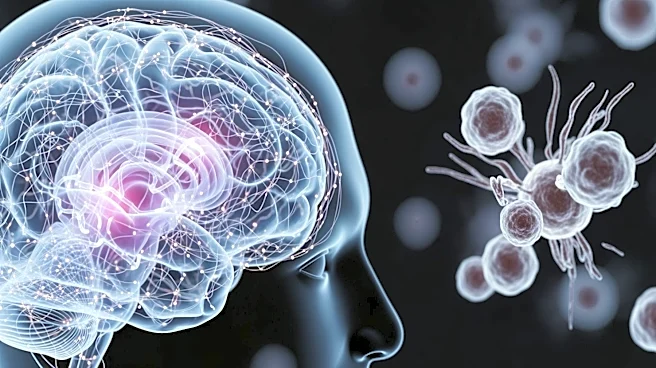


Interference theory is a significant concept in psychology that explains how new learning can disrupt the recall of previously learned information. This theory has evolved over time, with contributions from various psychologists who have expanded our understanding of memory and forgetting. From its inception in the late 19th century to its current applications, interference theory has undergone numerous changes and refinements.
Early Studies and Foundations
The concept of interference
in memory was first studied by John A. Bergström in 1892. His experiment involved subjects sorting two decks of cards with words into piles, demonstrating that the first set of sorting rules interfered with learning new ones. This early study laid the groundwork for understanding how prior learning can affect new information acquisition.
German psychologists Georg Elias Müller and Pilzecker further explored interference in 1900, focusing on retroactive interference. They used the term "associative Hemmung" to describe the inhibition of memory retrieval due to interference. This work was pivotal in distinguishing between proactive and retroactive interference, two key components of the theory.
Mid-20th Century Developments
In the mid-20th century, American psychologist Benton J. Underwood revisited the classic Ebbinghaus learning curve and found that most forgetting was due to interference from previously learned materials. His work in 1957 challenged existing decay theories and emphasized the role of interference in memory loss.
Underwood's research led to a paradigm shift, suggesting that proactive inhibition might be more significant than retroactive inhibition in explaining forgetting. This idea was further supported by studies conducted by Jenkins and Dallenbach in 1924, which showed that retention was better during sleep than during periods of activity, highlighting the impact of daily experiences on memory.
Modern Perspectives and Applications
Today, interference theory continues to be a vital area of study in cognitive psychology. Researchers use advanced techniques like functional magnetic resonance imaging (fMRI) to explore brain mechanisms involved in resolving interference. Studies have identified specific brain regions, such as the ventrolateral prefrontal cortex, that play a role in managing proactive interference.
Interference theory also finds applications in various fields, including advertising, where competitive brand ads can interfere with consumer recall. Understanding interference helps in designing strategies to reduce its impact, such as using multi-modal presentations to enhance memory retention.
Overall, interference theory has evolved from simple experimental observations to a complex framework that integrates cognitive processes and brain structures. Its development reflects the dynamic nature of psychological research and its ongoing quest to unravel the mysteries of human memory.