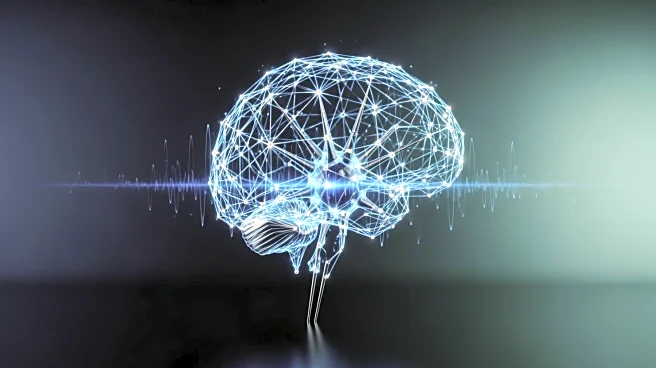




Computational neuroscience is a fascinating field that combines mathematics, computer science, and neuroscience to understand the brain's complex functions. This article delves into the historical development of computational neuroscience, highlighting key milestones and the evolution of this interdisciplinary field.
Early Beginnings
The roots of computational neuroscience can be traced back to the early 20th century. One of the earliest models was the integrate-and-fire
model of the neuron, introduced by Louis Lapicque in 1907. This model laid the groundwork for understanding how neurons process information. Later, in the mid-20th century, Hodgkin and Huxley developed the voltage clamp technique, which allowed them to create the first biophysical model of the action potential. Their work was pivotal in understanding how neurons communicate through electrical signals.
In the 1960s and 1970s, researchers like Hubel and Wiesel made significant contributions by discovering the organization of neurons in the visual cortex. Their work provided insights into how the brain processes visual information, further advancing the field of computational neuroscience.
The Rise of Computational Models
The 1980s and 1990s saw a surge in the development of computational models to simulate brain functions. The term 'computational neuroscience' was officially introduced in 1985 during a conference organized by Eric L. Schwartz. This period also marked the establishment of the first graduate program in computational neuroscience at the California Institute of Technology.
During this time, researchers began to focus on creating detailed models of neurons and neural networks. The development of software packages like GENESIS and NEURON allowed scientists to simulate realistic neurons and study their behavior in silico. These tools enabled researchers to explore complex neural dynamics and understand how different neural components interact.
Modern Advances and Applications
In recent years, computational neuroscience has continued to evolve, driven by advances in technology and interdisciplinary collaboration. Projects like Blue Brain aim to create detailed simulations of the brain, providing insights into its structure and function. These efforts have been supported by the development of powerful supercomputers and sophisticated algorithms.
Today, computational neuroscience plays a crucial role in understanding neurological and psychiatric disorders. By modeling brain mechanisms, researchers can gain insights into conditions like schizophrenia and depression, paving the way for new diagnostic and treatment approaches. The field also contributes to the development of artificial intelligence and machine learning, as researchers draw inspiration from the brain's computational strategies.
As computational neuroscience continues to grow, it holds the promise of unlocking the mysteries of the brain and revolutionizing our understanding of cognition and behavior.