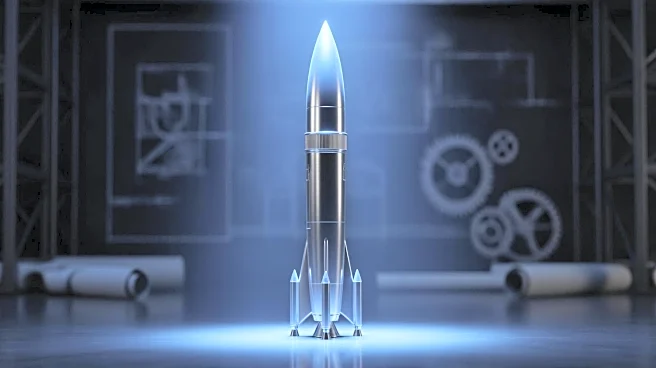



The V-2 rocket, developed by Wernher von Braun and his team, was a groundbreaking innovation in military technology during World War II. As the first long-range ballistic missile used in warfare, the V-2 represented a significant advancement in rocket technology. Its development and deployment had a profound impact on the course of the war and laid the groundwork for future advancements in aerospace engineering.
Development of the V-2 Rocket
Von Braun began working on rockets for
the German Army in 1933, and by 1936, he and his team had developed the A-3 rocket. However, the test area in Kummersdorf was too small for this newly-developed rocket, prompting a move to a larger facility in Peenemünde. It was here that von Braun started developing the A-4 rocket, which was later renamed the V-2.
The V-2 rocket was capable of carrying a one-ton warhead up to 50 miles into the air and traveling hundreds of miles to a target. It was the first rocket to fly into outer space and marked a significant milestone in the history of rocketry. The German government began mass production of the V-2 in 1943, using thousands of concentration camp prisoners as factory workers.
Deployment and Impact
The V-2 rocket was used extensively during World War II, with thousands fired at targets in Antwerp and Great Britain, particularly London. More than 1,700 V-2 rockets landed on Antwerp, killing over 3,700 people. The rocket's ability to strike targets from a distance without warning made it a formidable weapon.
Despite its destructive power, the V-2 had limitations. Its accuracy was often poor, and the production process was fraught with technical challenges. Nevertheless, the V-2 represented a significant leap forward in military technology and demonstrated the potential of rocket-powered weapons.
Legacy and Influence
The development of the V-2 rocket had a lasting impact on the field of aerospace engineering. It laid the foundation for future advancements in rocket technology and space exploration. After the war, von Braun and his team were brought to the United States through Operation Paperclip, where they continued their work on missile technology.
Von Braun's contributions to the development of the V-2 rocket were instrumental in advancing human understanding of rocketry. His work paved the way for the creation of the Saturn V rocket, which enabled the Apollo missions and the first human landing on the moon.