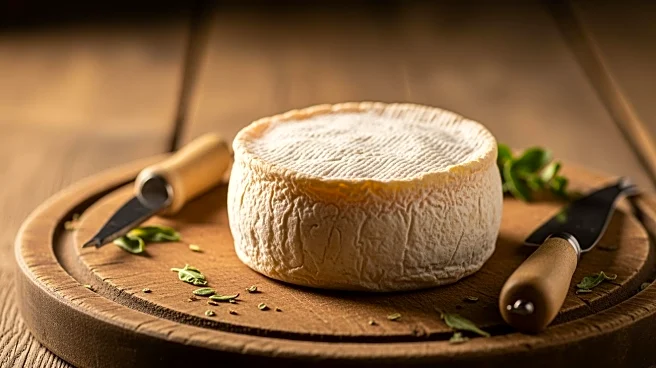




Reblochon cheese, a soft washed-rind delight from the French Alps, carries a rich history that dates back to the 14th century. This cheese, made from raw cow's milk, is not just a culinary treat but also a cultural artifact with deep roots in the traditions of the Haute-Savoie region. Its story is intertwined with the practices of mountain farmers and the religious customs of the time, making it a fascinating subject for those interested in the intersection
of food and history.
Origins and Early Production
Reblochon cheese originated in the Thônes and Arly valleys, nestled within the Aravis massif of the French Alps. The name itself is derived from the word "reblocher," meaning "to pinch a cow's udder again." This term refers to the practice of withholding some milk during the first milking to avoid taxes levied by landowners based on milk yield. The richer milk obtained from the second milking was used by dairymaids to produce Reblochon cheese, giving it a unique richness and flavor.
The cheese's production was centered in Thônes, where local cooperatives continue to uphold traditional methods. Until 1964, Reblochon was also produced in Italian Alpine areas, though it has since become predominantly French. The cheese's historical significance is further highlighted by its designation as a French AOC (Appellation d'Origine Contrôlée) since 1958, ensuring its authenticity and quality.
Cultural Significance
In the 16th century, Reblochon cheese gained the moniker "fromage de dévotion" or devotional cheese. This name arose from the tradition of offering the cheese to Carthusian monks in the Thônes Valley in exchange for blessings on the farmers' homesteads. This practice underscores the cheese's role not only as a food product but also as a cultural and religious symbol.
The cheese's nutty taste and soft texture have made it a staple in regional dishes, most notably tartiflette, a gratin made with potatoes, bacon, and onions. This dish exemplifies the cheese's integration into local culinary traditions, further cementing its cultural importance.
Modern Challenges and Adaptations
Despite its rich history, Reblochon cheese faces modern challenges, particularly in the United States. Since 2004, the cheese has been unavailable in the U.S. due to import laws requiring pasteurization of soft cheeses. This has led to the creation of substitutes like Delice du Jura, which mimic Reblochon's characteristics while adhering to U.S. regulations.
The cheese's continued production in the Haute-Savoie region and its adaptation for international markets reflect its enduring appeal and the efforts to preserve its legacy. As a product of both historical practices and modern adaptations, Reblochon cheese remains a testament to the rich culinary heritage of the French Alps.