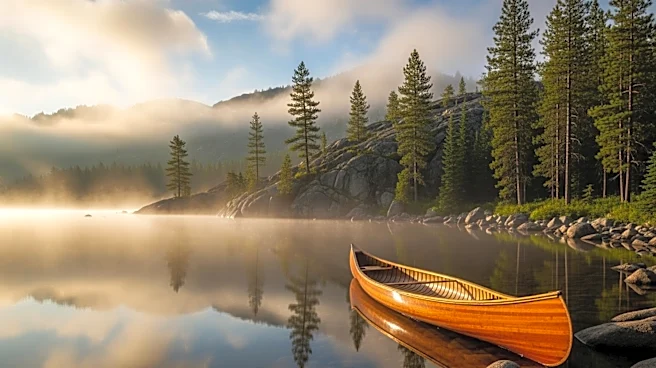




Voyageurs National Park, located in northern Minnesota, is a testament to the rich history and cultural significance of the region. Established in 1975, the park is named after the French-Canadian fur traders, known as voyageurs, who were among the first European settlers to traverse the area. This article delves into the historical timeline of the park, from its early human occupation to its establishment as a national park.
Early Human Occupation
The area now known as
Voyageurs National Park has been inhabited by humans for nearly 10,000 years. During the Paleo-Indian Period, people began to settle in the region as the waters of glacial Lake Agassiz receded. As time progressed into the Archaic Period, nomadic groups moved through the area, following the animals they hunted and the ripening grains. Fishing became a crucial food source during this time, marking a significant development in the region's history.
The Woodland Period saw further advancements, with the introduction of ceramics and the use of wild rice. This period also marked the creation of small, side-notched triangular projectile points, indicating a shift in the tools and technologies used by the inhabitants. These early periods laid the foundation for the rich cultural tapestry that would continue to evolve in the region.
European Exploration and Fur Trade
European exploration of the area began around 1688, with French explorer Jacques de Noyon wintering along the Rainy River. However, it was the demand for beaver pelts that truly brought European settlers to the region. The voyageurs expanded their range into the northwest territories of North America, establishing trade relationships with the Cree, Monsoni, and Assiniboine tribes.
By the mid-18th century, the Ojibwe had become the primary residents of the area, playing a crucial role in the fur trade as suppliers of food, furs, and canoes. This period of European exploration and trade significantly impacted the cultural and economic landscape of the region, setting the stage for future developments.
Establishment as a National Park
The idea of establishing a national park in Minnesota was first proposed in 1891, but it wasn't until nearly 80 years later that Voyageurs National Park was officially created. Federal legislation authorizing the park's creation was signed into law by President Richard Nixon on January 8, 1971, and the park was officially established in 1975.
At the time of its establishment, there were over 60 resorts around the park, with many choosing to sell their land to the National Park Service. This transition allowed the park to restore natural conditions and preserve the area's historical significance. Today, Voyageurs National Park stands as a testament to the region's rich history, offering visitors a glimpse into the past while preserving the natural beauty of the area for future generations.