



Supercomputers have revolutionized scientific research by providing unprecedented computational power to tackle complex problems. These machines are essential in fields ranging from quantum mechanics to climate research, enabling scientists to conduct simulations and analyses that were previously impossible. This article explores the impact of supercomputers on scientific research and their applications across various disciplines.
Quantum Mechanics and Molecular Modeling
In the realm of quantum
mechanics, supercomputers play a crucial role in simulating the behavior of particles at the atomic level. These simulations require immense computational power to solve complex equations and predict outcomes. Supercomputers allow researchers to explore quantum phenomena with greater accuracy, leading to advancements in fields like quantum computing and materials science.
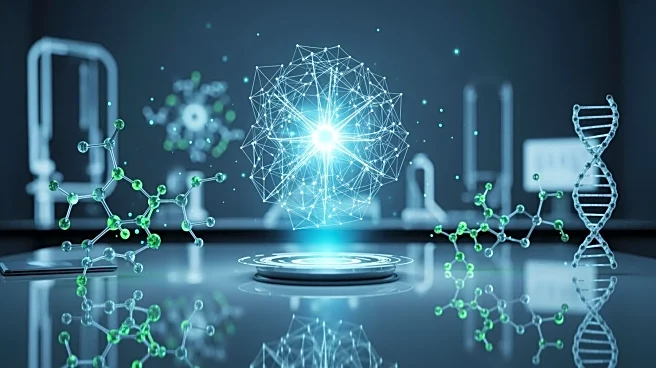
Molecular modeling is another area where supercomputers have made significant contributions. By computing the structures and properties of chemical compounds, biological macromolecules, and polymers, scientists can gain insights into molecular interactions and design new materials. Supercomputers enable the simulation of large molecular systems, facilitating drug discovery and the development of new therapies.
Climate Research and Weather Forecasting
Supercomputers are indispensable tools in climate research, where they are used to model and predict climate patterns. These models require processing vast amounts of data, including atmospheric conditions, ocean currents, and solar radiation. Supercomputers provide the computational power needed to simulate complex climate systems, helping scientists understand climate change and its potential impacts.
Weather forecasting also benefits from supercomputing capabilities. By analyzing data from satellites, weather stations, and other sources, supercomputers can generate accurate forecasts and predict extreme weather events. This information is vital for disaster preparedness and mitigating the effects of natural disasters.
National Security and Cryptanalysis
Supercomputers have applications in national security, particularly in cryptanalysis and nuclear simulations. Cryptanalysis involves breaking codes and encryptions, a task that requires significant computational resources. Supercomputers can process large volumes of data to decipher encrypted messages, aiding intelligence agencies in their efforts to maintain national security.
In the field of nuclear simulations, supercomputers are used to model nuclear reactions and test the safety and effectiveness of nuclear weapons. These simulations are crucial for compliance with international treaties and ensuring the reliability of nuclear arsenals without the need for physical testing.
Supercomputers have transformed scientific research by providing the computational power necessary to tackle complex problems across various fields. Their impact is evident in advancements in quantum mechanics, climate research, and national security, among others. As technology continues to evolve, supercomputers will remain at the forefront of scientific discovery and innovation.