
Crumple zones have become a crucial aspect of vehicle safety, designed to absorb impact energy during collisions. This article delves into the historical development of crumple zones, highlighting key advancements and their impact on automotive safety. From their inception to modern implementations, crumple zones have evolved significantly, offering enhanced protection for vehicle occupants.
Early Development and Conceptualization
The concept of crumple zones was first introduced by Austrian
engineer Béla Barényi in 1937. Barényi challenged the prevailing notion that a safe car had to be rigid, proposing instead that the car body should be divided into sections with crumple zones at the front and rear. This idea was further developed in 1952 when Barényi patented the design, marking a significant milestone in automotive safety.
The first practical application of crumple zones was seen in the 1953 Mercedes-Benz "Ponton," which incorporated a strong platform to form a partial safety cell. This design laid the groundwork for future developments, emphasizing the importance of controlled deformation to absorb collision energy and protect occupants.
Advancements in Crumple Zone Technology
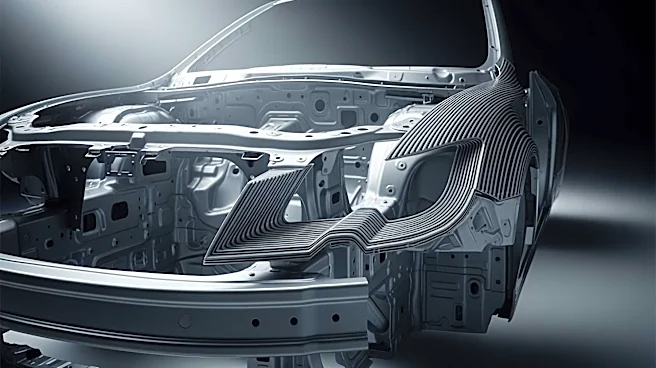
Over the years, crumple zones have undergone significant advancements, driven by the need for improved safety standards. The introduction of curved longitudinal members in vehicle design allowed for better absorption of collision energy. These members were later enhanced with vertical and lateral ribs, forming telescoping "crash can" structures that further improved energy dissipation.
Modern crumple zones are designed to manage crash energy effectively, increasing the time over which deceleration occurs and preventing intrusion into the passenger cabin. This is achieved by strengthening the inner part of the vehicle body, creating a rigid "safety cell" that distributes impact energy over a wider area, reducing deformation and enhancing occupant protection.
Impact on Vehicle Safety Standards
The implementation of crumple zones has had a profound impact on vehicle safety standards worldwide. Studies have shown that vehicles equipped with crumple zones provide superior protection in collisions compared to older models without such features. The effectiveness of crumple zones was dramatically demonstrated in crash tests, such as the 2009 Chevrolet Malibu versus 1959 Chevrolet Bel Air test, highlighting the advancements in modern car safety design.
Crumple zones have also influenced the design of other safety features, such as seat belts and airbags, which work in conjunction to reduce the risk of injury during collisions. As technology continues to evolve, crumple zones remain a vital component of vehicle safety, ensuring that occupants are better protected in the event of an accident.