



Walking is a complex activity that involves the coordination of muscles, joints, and neural control. One of the key factors contributing to efficient walking is passive dynamics. This concept refers to the natural swing of the legs that occurs without active muscle control. By leveraging passive dynamics, both humans and robots can achieve more efficient walking. This article explores the role of passive dynamics in walking efficiency and its applications
in robotics and prosthetics.
Understanding Passive Dynamics
Passive dynamics is based on the idea that the natural swing of the legs can be harnessed to achieve efficient walking. In humans, this natural movement is facilitated by the structure of the legs and the distribution of mass. The legs act like pendulums, swinging forward with minimal energy expenditure. This natural swing reduces the need for active muscle control, allowing for more efficient locomotion. In robotics, passive dynamics is used to design robots that mimic human-like gaits. By allowing the legs to swing naturally, robots can achieve efficient walking with fewer motors and less energy consumption.
Applications in Robotics
The concept of passive dynamics has been successfully applied in the design of walking robots. Early walking robots required multiple motors to control each joint, resulting in high energy consumption. However, by incorporating passive dynamics, modern robots can achieve efficient walking with fewer motors. For example, passive dynamic walkers use the natural swing of the legs to move forward, reducing the need for active control. This approach not only improves energy efficiency but also results in more human-like gaits. As a result, passive dynamics has become a key consideration in the design of robotic walkers and exoskeletons.
Advancements in Prosthetics
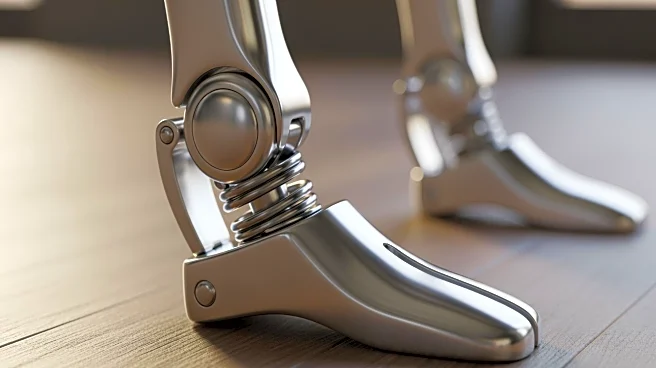
Passive dynamics also plays a crucial role in the development of prosthetic limbs. Traditional prosthetics often require significant energy expenditure from the user, leading to fatigue and discomfort. By incorporating passive dynamics, prosthetic limbs can be designed to mimic the natural swing of the legs, reducing the energy required for walking. This approach has led to the development of more efficient and comfortable prosthetic limbs, improving the quality of life for amputees. Researchers continue to explore ways to enhance prosthetic design by leveraging passive dynamics, with the goal of creating limbs that closely replicate natural walking.
In summary, passive dynamics is a fundamental concept that contributes to efficient walking in both humans and robots. By harnessing the natural swing of the legs, passive dynamics reduces energy consumption and improves walking efficiency. This concept has significant implications for the design of robotic walkers and prosthetic limbs, offering the potential for more efficient and human-like locomotion.