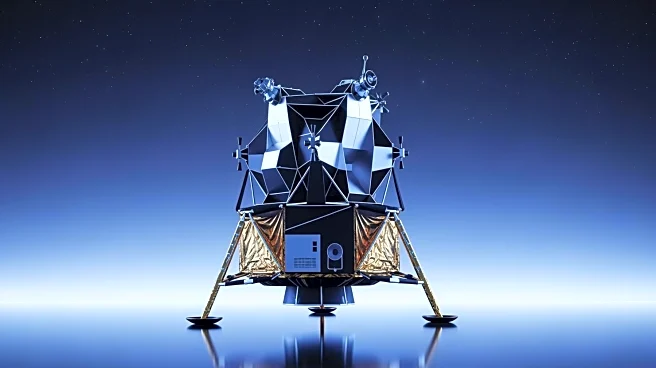




Apollo 5 marked a significant milestone in the history of space exploration as it was the first uncrewed test flight of the Apollo Lunar Module (LM). Conducted in January 1968, this mission was crucial for demonstrating the capabilities of the LM's propulsion systems, which were essential for future crewed lunar landings. As part of NASA's Apollo program, Apollo 5 played a pivotal role in ensuring the success of subsequent missions that would eventually
land humans on the Moon.
The Purpose and Planning of Apollo 5
The primary objective of Apollo 5 was to test the Lunar Module's propulsion systems in space. The LM, designed to land astronauts on the Moon and return them to lunar orbit, required rigorous testing to ensure its reliability. The mission aimed to validate the performance of the descent and ascent engines, which were critical for landing on and taking off from the lunar surface. This uncrewed test was a necessary step before any crewed missions could be attempted.
Planning for Apollo 5 involved meticulous preparation and coordination. The mission was initially scheduled for an earlier date but faced delays due to development challenges with the LM. These delays underscored the complexity of the technology and the importance of thorough testing. Despite these setbacks, the mission was successfully launched on January 22, 1968, from Cape Kennedy, Florida, using a Saturn IB rocket.
Key Achievements and Challenges
Apollo 5 successfully demonstrated the LM's propulsion systems, achieving its primary objectives. The mission tested the descent engine's ability to throttle and the ascent engine's capability to restart in space, simulating the conditions of a lunar landing and takeoff. These tests were crucial for verifying the LM's design and ensuring the safety of future crewed missions.
However, the mission was not without its challenges. A programming error caused the first descent stage firing to be cut short, but the mission team was able to adapt and continue testing. The ascent engine was fired in a "fire-in-the-hole" test, where it was ignited simultaneously with the jettison of the descent stage, simulating an abort scenario. These tests provided valuable data and confirmed the LM's readiness for future missions.
The Legacy of Apollo 5
Apollo 5's success laid the groundwork for subsequent Apollo missions, particularly those involving crewed lunar landings. The data and experience gained from this mission were instrumental in refining the LM's design and operations. The mission's achievements demonstrated the feasibility of the lunar landing strategy and boosted confidence in the Apollo program's ability to achieve its ambitious goals.
In retrospect, Apollo 5 stands as a testament to the ingenuity and determination of the engineers and scientists involved in the Apollo program. It highlighted the importance of rigorous testing and adaptation in the face of challenges, setting the stage for the historic achievements that followed. As a key step in the journey to the Moon, Apollo 5 remains a significant chapter in the story of human space exploration.