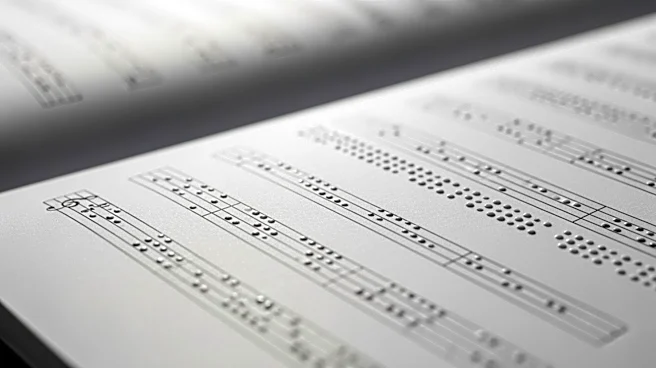

Braille music is a specialized braille code that allows visually impaired musicians to read and perform music using braille cells. Developed by Louis Braille, this system has enabled countless musicians to engage
with music in a meaningful way. This article explores the intricacies of braille music notation, its learning process, and its significance in the world of music.
Understanding Braille Music Notation
Braille music uses the same six-position braille cell as literary braille but assigns its own meanings, syntax, and abbreviations. Almost anything that can be written in print music notation can be transcribed into braille music notation, making it a comprehensive system for visually impaired musicians. The world's largest collection of braille music notation is housed at the Library of Congress in the United States, highlighting its importance and widespread use.
Braille music notation simplifies the memorization of scores, as blind musicians often need both hands to play their instruments. For example, identifying Middle C requires simply reading the written note rather than understanding its position on a staff. This logical and simplified approach makes braille music accessible to musicians who have reasonable competence in reading literary braille.
Learning and Teaching Braille Music
Learning braille music is akin to learning print music, with a notation system that transcribes notes, rhythm, and other musical elements. Music teachers with no prior knowledge of braille music can easily learn its rudiments and guide students through the learning process. Many standard works for various genres and instruments are available in braille, ensuring that visually impaired musicians have access to a wide range of musical literature.
Transcribing music into braille is a crucial aspect of making music accessible to visually impaired musicians. In the United States, Canada, the United Kingdom, and other countries, networks of braille music transcribers work to transcribe music that has never been transcribed before. Additionally, braille-output computer-music systems, such as Goodfeel and BrailleMUSE, automatically convert print notation into braille, further expanding accessibility.
The Impact of Braille Music
Braille music has had a profound impact on the lives of visually impaired musicians, allowing them to participate fully in the world of music. The system's logical structure and ease of memorization have made it an invaluable tool for musicians who rely on touch rather than sight.
The development and dissemination of braille music have fostered a sense of community and empowerment among visually impaired musicians, enabling them to pursue their passion for music without limitations. As technology continues to advance, the accessibility and reach of braille music are likely to expand, offering even more opportunities for musicians to engage with their art.