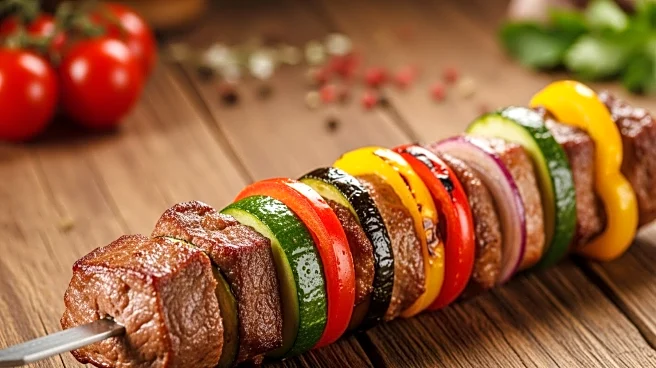




The doner kebab is more than just a popular dish; it is a cultural phenomenon that has transcended its Turkish origins to become a global favorite. This savory delight, cooked on a vertical rotisserie, has not only influenced culinary practices worldwide but also played a role in cultural exchange and integration. The story of the doner kebab is one of innovation, migration, and adaptation.
Origins and Early Popularity
The doner kebab originated in the Ottoman Empire, with its
roots in the town of Bursa, Turkey. It was here that the vertical rotisserie was first introduced, revolutionizing the way meat was cooked and served. The doner kebab quickly gained popularity in Turkey, becoming a staple in local cuisine. Its unique preparation method, involving seasoned meat stacked in an inverted cone, allowed for efficient cooking and easy serving.
As the doner kebab gained traction in Turkey, it began to influence neighboring regions. The dish's versatility and flavor made it a favorite among locals and travelers alike. It wasn't long before variations of the doner kebab, such as the Arab shawarma and Greek gyros, emerged, each incorporating local ingredients and flavors.
Global Spread and Adaptation
The global spread of the doner kebab can be largely attributed to migration and cultural exchange. In the 1970s, Turkish immigrants in West Berlin popularized the dish, introducing it to a new audience. The doner kebab quickly became a hit in Germany, where it was adapted into a sandwich form, complete with salad and sauces. This version of the doner kebab became a staple of German street food, beloved for its convenience and taste.
From Germany, the doner kebab spread across Europe and beyond. Each region put its own spin on the dish, incorporating local flavors and ingredients. In Canada, the donair, a variation of the doner kebab, became the official food of Halifax. In Mexico, the al pastor, inspired by the doner kebab, became a popular street food, showcasing the dish's adaptability and appeal.
Cultural Significance
The doner kebab's journey from a local Turkish dish to a global sensation highlights its cultural significance. It serves as a symbol of culinary innovation and cultural integration, bringing people together through shared tastes and experiences. The doner kebab has not only enriched global cuisine but also fostered a sense of connection among diverse communities.
Today, the doner kebab continues to be a favorite around the world, celebrated for its rich flavors and cultural heritage. Its impact on global cuisine is undeniable, and its story is a testament to the power of food to transcend borders and unite people. As the doner kebab continues to evolve, it remains a beloved dish that reflects the dynamic nature of cultural exchange.