



The Empire State Building stands as a testament to architectural ambition and historical significance. Completed in 1931, this 102-story skyscraper in Midtown Manhattan, New York City, was once the tallest building in the world. Its construction marked a pivotal moment in the history of skyscrapers, and it has since become one of the most recognizable landmarks in the United States.
Construction and Design
The Empire State Building was designed by the architectural firm Shreve,
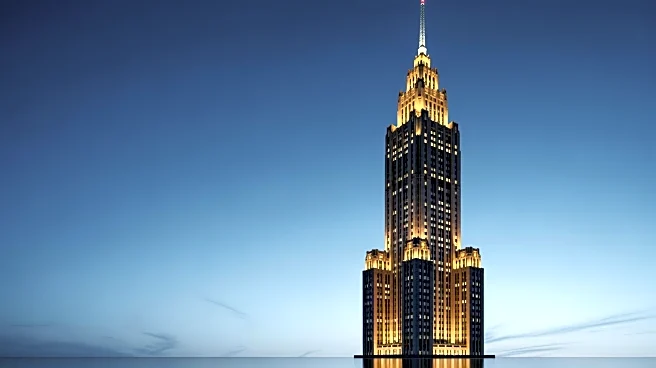
Lamb & Harmon Associates. The building was constructed in a remarkably short period of 410 days, a feat that was achieved by demolishing the old Waldorf-Astoria Hotel to make way for the new skyscraper. The design was inspired by the 21-story Reynolds Building in Winston-Salem, which was built in 1929. The Empire State Building's Art Deco style and towering height were emblematic of the era's architectural trends.
When the building opened on May 1, 1931, it was inaugurated by President Herbert Hoover, who turned on the lights from Washington, D.C. This event marked the beginning of the building's reign as the tallest in the world, a title it held until the completion of the World Trade Center's North Tower in 1970.
The Tallest Building in the World
For nearly four decades, the Empire State Building was the tallest building in the world. Its height, including the antenna spire, reaches 1,454 feet (443 meters). This impressive stature made it a symbol of New York City's skyline and a point of pride for the city. The building's prominence was briefly restored after the September 11, 2001 attacks, when the World Trade Center towers were destroyed, making the Empire State Building the tallest in New York once again.
In 2012, the completion of the new One World Trade Center surpassed the Empire State Building in height, but the latter remains an iconic part of New York City's architectural heritage.
Notable Events
The Empire State Building has been the site of several notable events throughout its history. On July 28, 1945, a B-25 bomber crashed into the building due to heavy fog, causing a fire and resulting in the deaths of 14 people. Despite the damage, the building was only slightly affected structurally.
Another incident occurred on January 24, 2000, when an elevator cable snapped, causing the elevator to crash from the 44th floor to the 4th floor. Fortunately, the passengers were only slightly injured. These events highlight the building's resilience and its ability to withstand adversity.
The Empire State Building continues to be a symbol of New York City's strength and ambition, attracting millions of visitors each year who come to marvel at its history and architectural grandeur.