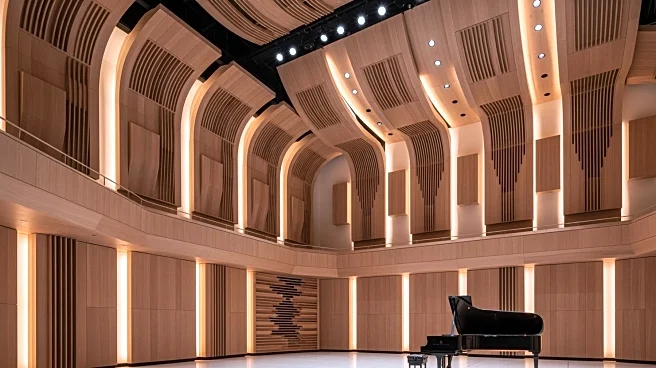




The Pikes Peak Center for the Performing Arts in Colorado Springs, Colorado, is renowned not only for its role as a cultural hub but also for its architectural and acoustic design. Opened in 1982, this venue has been praised for its innovative features that enhance the experience of both performers and audiences. The center's design and acoustics have earned it international acclaim, making it a standout facility in the region.
Architectural Design
The Pikes Peak Center
was constructed as part of an economic rejuvenation plan for downtown Colorado Springs. Its design was intended to serve as a regional entertainment and cultural center, reflecting the community's commitment to the arts. The building's architecture is both functional and aesthetically pleasing, with a focus on creating an inviting space for a variety of performances.
The center's seating arrangement is thoughtfully designed to accommodate different types of events. It features seating in the orchestra, loge, mezzanine, and balcony sections, with additional side box seats at the mezzanine and balcony levels. This flexible seating arrangement allows the center to host a wide range of performances, from symphonies to theatrical productions.
Acoustic Features
One of the most impressive aspects of the Pikes Peak Center is its acoustics, designed by Artec Consultants Inc., a firm known for its expertise in theater consulting and acoustics. The El Pomar Great Hall, the main performance space, includes several acoustic control features that can be adjusted to suit different types of performances.
Retractable banners along the side walls and curtains on the rear wall of each seating level can be lowered to absorb sound for events using the sound system. For symphonic and choral events, these features are retracted to allow for optimal sound dispersion. The acoustic canopy above the orchestra platform can also be adjusted to reflect sound to different seating areas, ensuring a high-quality auditory experience for all attendees.
Enhancing the Performance Experience
The Pikes Peak Center's design extends beyond acoustics to include practical features that enhance the overall performance experience. The stage is equipped with a proscenium that can be adjusted in size, and the stage floor is designed to provide the necessary resilience for dance performances. Additionally, the center includes state-of-the-art equipment loading and transport facilities, ensuring that performances can be set up efficiently.
The center's commitment to excellence in design and acoustics has made it a preferred venue for artists and audiences alike. Its ability to host over 200 concerts annually is a testament to its versatility and the high regard in which it is held by the performing arts community. The Pikes Peak Center continues to be a beacon of cultural and architectural achievement in Colorado Springs.