

The Artemis II mission is a testament to the technological advancements in space exploration, pushing the boundaries of what is possible in human spaceflight. As the first crewed mission of the Orion spacecraft, Artemis II will test new technologies and systems critical for future lunar and deep space missions. This mission is a crucial step in ensuring the safety and success of NASA's long-term goals for space exploration.
The Space Launch System: A New Era of Rocketry
At the heart of the Artemis
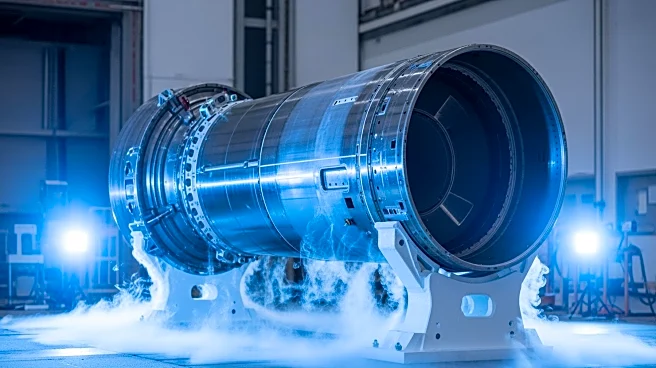
II mission is the Space Launch System (SLS), NASA's most powerful rocket to date. The SLS is designed to carry the Orion spacecraft beyond low Earth orbit, providing the necessary thrust to reach the Moon. The rocket's core stage, equipped with four RS-25 engines, will work in tandem with two solid rocket boosters to propel the spacecraft into space.
The development of the SLS has been a significant engineering challenge, requiring the integration of new technologies with proven components from the Space Shuttle program. The rocket's design allows for future upgrades, ensuring it can support increasingly complex missions as NASA's exploration goals evolve. The successful launch of Artemis II will demonstrate the SLS's capabilities and pave the way for future missions to the Moon and beyond.
Orion Spacecraft: A Technological Marvel
The Orion spacecraft is at the forefront of space technology, designed to support human life during extended missions in deep space. One of the key innovations of the Orion spacecraft is its life support system, which will be tested in a deep space environment for the first time during Artemis II. This system is responsible for maintaining a safe and comfortable environment for the crew, regulating temperature, humidity, and air quality.
Another critical component of the Orion spacecraft is its communication system, which includes the new Optical to Orion (O2O) system. This optical communication system promises to enhance data transmission rates between the spacecraft and Earth, allowing for faster and more reliable communication with mission control. The successful demonstration of this system during Artemis II will be crucial for future missions, where timely communication is essential for mission success.
Overcoming Challenges: Ensuring Mission Success
The Artemis II mission presents several challenges, from the integration of new technologies to the rigorous testing of spacecraft systems. One of the primary goals of the mission is to validate the performance of the Orion spacecraft and the SLS in a deep space environment. This includes testing the spacecraft's navigation and propulsion systems, ensuring they can operate effectively in the challenging conditions of space.
The mission will also involve a series of scientific experiments to study the effects of space travel on the human body. These experiments will provide valuable data to inform the development of future missions, ensuring the safety and well-being of astronauts on long-duration flights. By overcoming these challenges, Artemis II will set the stage for future exploration missions, advancing our understanding of space and our ability to explore it.
In conclusion, Artemis II is a pivotal mission in the Artemis program, showcasing the technological advancements that will enable human exploration of the Moon and beyond. The mission's success will demonstrate the capabilities of the SLS and Orion spacecraft, paving the way for future missions and inspiring a new era of space exploration.