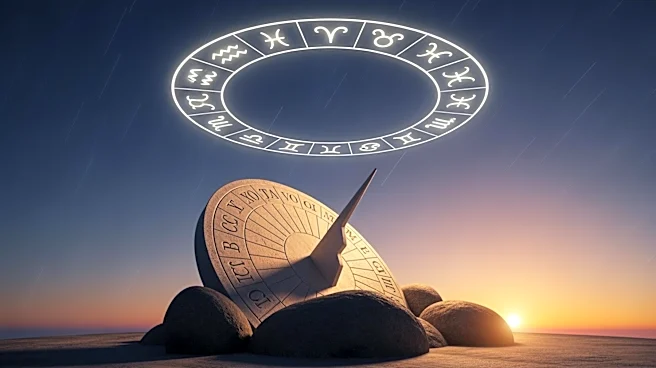

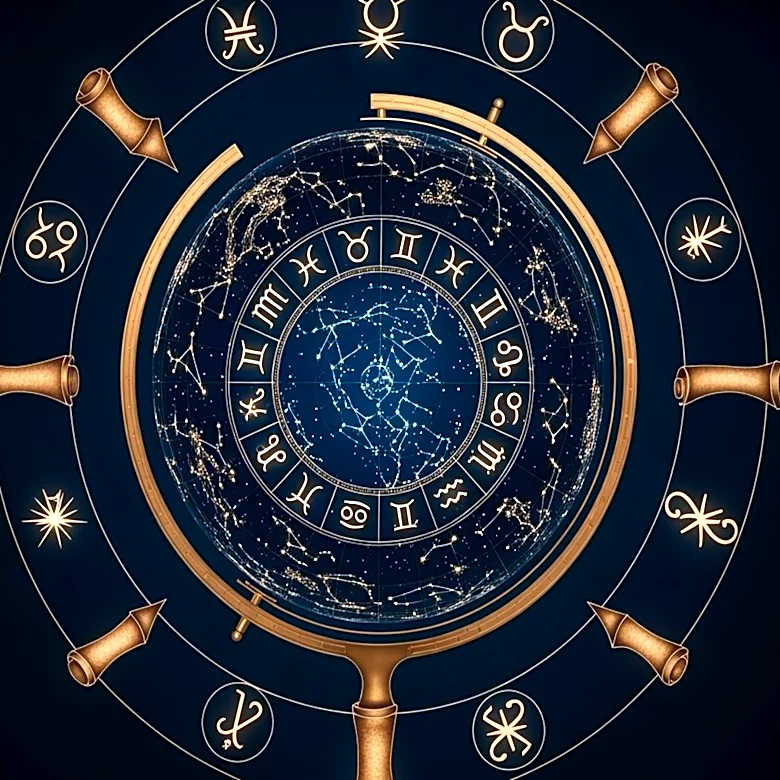





Astrological ages are a fascinating concept in astrology, representing long periods marked by the Earth's precessional rotation. Each age lasts approximately 2,160 years, with the Age of Aquarius following the Age of Pisces. The transition between ages is determined by the movement of the vernal equinox from one zodiac constellation to the next, influencing cultural and societal shifts throughout history.
The Mechanics of Astrological Ages
Astrological ages are based on the Earth's
axial precession, a slow wobble that takes about 25,800 years to complete. This cycle is divided into twelve zodiac signs, each representing an astrological age. The average duration of an age is 2,160 years, though this is a rough estimate due to the increasing rate of precession.
The transition between ages occurs when the Sun's position at the vernal equinox moves into a new zodiacal constellation. This movement is independent of the Earth's daily rotation and annual revolution around the Sun. The International Astronomical Union's definition of constellation boundaries places the start of the Age of Aquarius around 2600 CE, though many astrologers prefer the traditional convention of equally-sized signs.
Historical Perspectives on Astrological Ages
Throughout history, astrological ages have been associated with significant cultural and societal changes. The Age of Pisces, for example, is often linked to the rise of Christianity and religious influence. As the world transitions to the Age of Aquarius, astrologers predict shifts towards scientific rationalism and human rights.
Rudolf Steiner, a spiritual philosopher, believed that each age lasts exactly 2,160 years. According to Steiner, the world has been in the Age of Pisces since 1413, with the Age of Aquarius set to begin in 3573 CE. His approach highlights the spiritual significance of these ages, including the return of Christ in the ethereal world and the incarnation of Ahriman, a destructive spirit.
The Influence of Astrological Ages
Astrological ages are thought to affect humanity by influencing the rise and fall of civilizations and cultural tendencies. The Age of Aquarius is traditionally associated with themes of enlightenment, progress, and humanitarianism. Some believe it will bring about a shift from religious dominance to a focus on scientific rationalism and human rights.
Others predict a darker outcome, with knowledge and science being abused, leading to a new dark age. The Age of Aquarius is seen by some as a time of spiritual deficiency, where evil must be recognized as a real force. This perspective aligns with Carl Jung's view that the age will constellate the problem of the union of opposites, challenging humanity to confront its darker aspects.