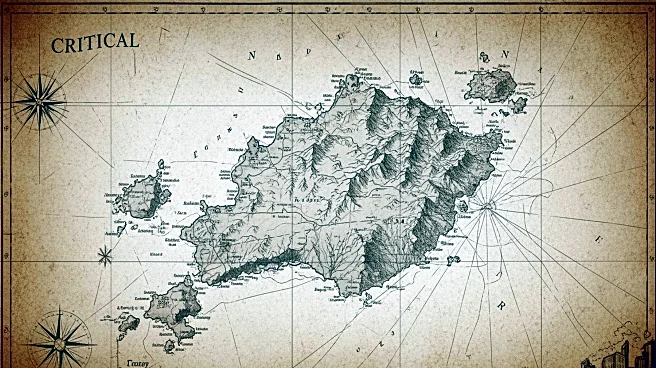

Corsica, an island in the Mediterranean Sea, has a rich and complex history that spans thousands of years. From its early settlement by hunter-gatherers to its modern status as a French territorial collectivity,
Corsica has been shaped by various cultures and political powers. This article delves into the historical timeline of Corsica, highlighting key events and transitions that have defined the island's identity.
Ancient Beginnings
Corsica's history dates back to the 8th millennium BC when it was first settled by hunter-gatherers from Liguria. These early inhabitants walked to the island over a land bridge created by the modern islands of Elba and Capraia. Around 6000 BC, the Neolithic Cardium pottery culture replaced the original settlers, marking a significant cultural shift. The island's strategic location made it a hub for Mediterranean trade, and its natural resources, such as timber and raw materials, were highly valued.
In the Bronze Age, Corsica saw the development of fixed settlements and round stone towers known as torri. Despite these advancements, the island did not experience urbanization until the 9th century BC. The interior of Corsica maintained its independence, largely untouched by external influences until Roman times.
Roman Influence and Medieval Struggles
The Roman conquest of Corsica began in 259 BC during the First Punic War. The island became part of the province of Sardinia et Corsica, serving as a buffer zone to protect the Italian mainland. Roman rule brought about significant changes, including the establishment of coloniae and the introduction of Roman administration. However, Corsica's rugged terrain and independent spirit made it difficult for the Romans to fully control the island.
Following the fall of the Roman Empire, Corsica faced invasions by the Vandals, Byzantines, and Saracens. The island's strategic importance continued to attract various powers, leading to a period of instability and conflict. Despite these challenges, Corsica's unique cultural identity persisted, influenced by its diverse history.
Modern Era and Autonomy
In the 18th century, Corsica declared itself a republic under the leadership of Pasquale Paoli. However, the island's independence was short-lived, as it was ceded to France in 1768. Corsica's integration into France brought about significant changes, including the introduction of French as the official language.
Today, Corsica is a territorial collectivity of France, with a degree of autonomy that allows it to exercise limited executive powers. The island's rich history is reflected in its cultural heritage, from the ancient megaliths to the influence of Italian and French traditions. Corsica's journey from a remote island to a modern region of France is a testament to its resilience and adaptability.