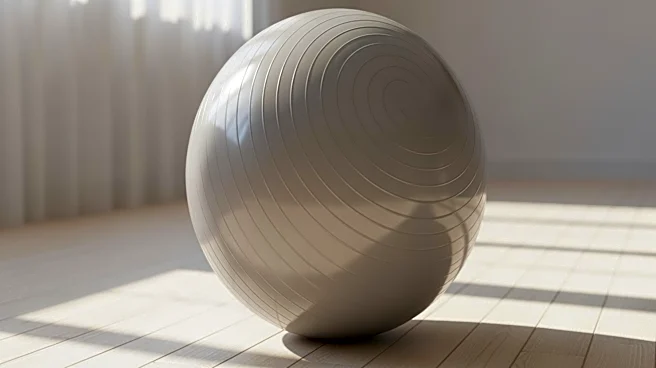



The exercise ball, also known as a stability ball, has become a staple in fitness and rehabilitation settings worldwide. Its journey from a simple plastic ball to a versatile exercise tool is a fascinating story of innovation and adaptation. This article explores the historical development of the exercise ball, highlighting key milestones and its growing popularity in various fitness disciplines.
Origins and Early Development
The exercise ball, originally known as the "Swiss Ball,"
was developed in 1963 by Aquilino Cosani, an Italian plastics manufacturer. Cosani's innovation involved creating a large, puncture-resistant plastic ball, which quickly found its way into therapeutic settings. The ball's initial use was in Switzerland, where it was employed in treatment programs for newborns and infants. British physiotherapist Mary Quinton, working in Switzerland, was among the first to integrate these balls into therapy.
Dr. Susanne Klein-Vogelbach, a prominent figure in physical therapy, further advanced the use of the exercise ball. As the director at the Physical Therapy School in Basel, Switzerland, she incorporated the ball into neuro-developmental treatment. Her 1985 publication, "Ballgymnastik zur funktionellen Bewegungslehre," detailed various exercises using the ball, solidifying its role in physical therapy.
Expansion into Fitness and Sports
The exercise ball's transition from therapy to fitness began in the late 20th century. American physical therapists, inspired by its therapeutic benefits, started incorporating the ball into fitness routines. Joanne Posner-Mayer's 1995 book, "Swiss Ball Applications for Orthopedic and Sports Medicine," played a significant role in popularizing the ball in the United States.
As its popularity grew, the exercise ball became a common tool in athletic training and general fitness routines. Its ability to engage core muscles and improve balance made it a favorite among athletes and fitness enthusiasts. The ball's versatility allowed it to be used in various exercises, from simple sit-ups to complex Pilates routines, further cementing its place in the fitness world.
Modern Uses and Benefits
Today, the exercise ball is recognized for its numerous benefits, particularly in core strengthening and balance improvement. Its unstable surface requires users to engage multiple muscle groups to maintain balance, enhancing the effectiveness of exercises. This feature makes it a valuable tool for both beginners and advanced fitness practitioners.
In addition to fitness, the exercise ball is used in alternative practices like yoga and Pilates. It also serves as a "birth ball" during labor, aiding in fetal positioning and providing comfort to expectant mothers. Despite its widespread use, it's important to note that sitting on an exercise ball without additional exercises does not provide significant benefits.
The exercise ball's journey from a therapeutic tool to a fitness staple highlights its adaptability and effectiveness. As it continues to evolve, it remains a testament to the innovative spirit of its creators and the ever-changing landscape of fitness and rehabilitation.