







Yosemite Valley, nestled in the Sierra Nevada mountains of California, is a stunning example of geological processes at work. This glacial valley, renowned for its towering granite cliffs and breathtaking waterfalls, offers a glimpse into the Earth's dynamic history. The valley's formation and its unique geological features make it a fascinating subject for both geologists and nature enthusiasts alike.
The Formation of Yosemite Valley
Yosemite Valley's formation is a tale of geological
transformation over millions of years. The valley was shaped by glacial activity, which carved out its deep, U-shaped profile. During the late Cretaceous period, granitic rock was emplaced as plutons deep within the Earth. Over time, the Sierra Nevada was uplifted, exposing this rock to surface erosion. Successive ice ages further sculpted the valley, deepening it to its current depth of 3,000 to 3,500 feet.
The valley's floor, sitting at approximately 4,000 feet above sea level, is a testament to the power of glacial forces. The last glaciation, known as the Wisconsinian, was not the most severe, but it left a significant mark on the landscape. The glaciers of this period reached as far as Bridalveil Fall, leaving behind a flat valley floor covered in sediment deposited by ancient Lake Yosemite.
Iconic Granite Formations
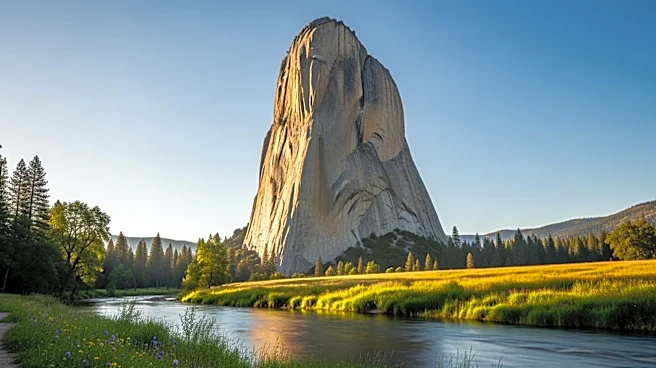
Yosemite Valley is home to some of the most iconic granite formations in the world. El Capitan and Half Dome are perhaps the most famous, drawing rock climbers and tourists from around the globe. These formations are composed of different types of granite, including El Capitan Granite and Half Dome Granodiorite, each with its unique mineral composition.
The granitic rocks of Yosemite Valley are primarily made up of quartz, feldspar, biotite, and hornblende. The El Capitan pluton, which forms much of the central part of the valley, is one of the oldest, dating back 114 million years. In contrast, the Half Dome granodiorite is the youngest, at 87 million years old, and forms the striking Half Dome and Glacier Point.
Waterfalls and Waterways
The valley's waterways are another key feature of its geological landscape. The Merced River, which drains the valley, is fed by numerous streams and waterfalls, including the famous Yosemite Falls, the highest waterfall in North America. These water features are most prominent in the spring when snowmelt from the surrounding mountains swells the streams.
The Giant Staircase, a series of waterfalls and rapids, is a highlight of the valley's hydrology. Nevada Fall and Vernal Fall are two of the most picturesque waterfalls, with the Merced River cascading down granite slopes before continuing its journey through the valley. These waterways not only add to the valley's beauty but also play a crucial role in shaping its landscape over time.