
The Solar Orbiter, launched by the European Space Agency in 2020, is a technological marvel designed to study the Sun up close. This article delves into the innovative technology and instruments that enable
the Solar Orbiter to withstand the harsh solar environment and gather critical data.
Heat Shield and Solar Arrays
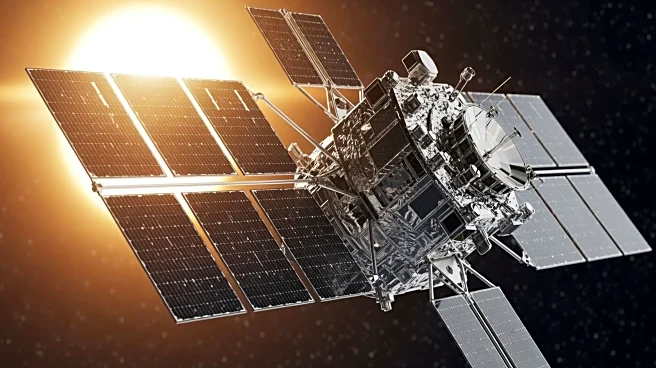
One of the most crucial components of the Solar Orbiter is its dedicated heat shield. This shield protects the spacecraft from the intense solar flux it encounters near perihelion, allowing it to approach the Sun as close as 0.284 astronomical units. The heat shield is a testament to the engineering prowess behind the mission, ensuring that the sensitive instruments remain operational despite the extreme conditions.
The Solar Orbiter's solar arrays are another key technological feature. Inherited from ESA's BepiColombo mission, these arrays can be rotated about their longitudinal axis to prevent overheating when the spacecraft is close to the Sun. This capability is essential for maintaining power and functionality during the mission's critical phases.
Communication Systems
Maintaining communication with Earth is vital for the success of the Solar Orbiter mission. The spacecraft is equipped with a Telemetry, Tracking, and Command Subsystem that provides a communication link in X-band. This subsystem supports telemetry, telecommand, and ranging, ensuring that data collected by the Solar Orbiter is transmitted back to scientists for analysis.
The High-Temperature High-Gain Antenna is designed to point to a wide range of positions to achieve a link with ground stations. This antenna can be folded in for protection from the heat shield if necessary, allowing the spacecraft to store data in onboard memory and send it back to Earth at the earliest opportunity.
Scientific Instruments
The Solar Orbiter carries a suite of ten scientific instruments, each designed to study different aspects of the Sun and its environment. These include the Solar Wind Plasma Analyser, which measures the ion and electron properties of the solar wind, and the Energetic Particle Detector, which analyzes the composition and distribution of energetic particles.
Other instruments, such as the Magnetometer and the Radio and Plasma Waves instrument, provide insights into the heliospheric magnetic field and electromagnetic waves in the solar wind. The Polarimetric and Helioseismic Imager offers high-resolution measurements of the Sun's magnetic field, while the Extreme Ultraviolet Imager captures images of the solar atmosphere.
Together, these instruments form a comprehensive toolkit for understanding the Sun's behavior and its impact on the solar system. The Solar Orbiter's technological innovations continue to push the boundaries of solar exploration, paving the way for future missions and discoveries.