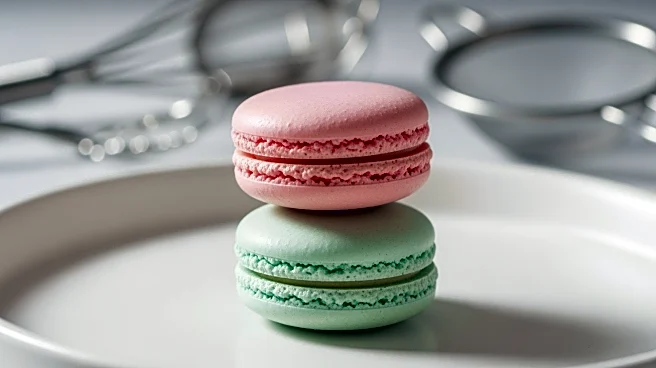



The macaron, a delicate and colorful confection, has a rich history that traces back to France in the 19th century. Known for its smooth top and ruffled edge, this meringue-based treat has evolved significantly over the years. From its humble beginnings to becoming a symbol of French patisserie, the macaron's journey is a fascinating tale of culinary innovation and cultural significance.
Origins and Early Development
The macaron's story begins in France, where it was created in the
19th century. Initially, it was a simple almond-based cookie made with egg whites, sugar, and almond meal. The macaron's design was straightforward, featuring a smooth top and a ruffled edge, known as the "crown" or "foot." This basic form laid the foundation for what would become a beloved treat across the globe.
The macaron's early popularity can be attributed to its unique texture and flavor. As a mildly moist confection, it melts in the mouth, offering a delightful experience to those who indulge in it. Over time, bakers began experimenting with fillings, adding ganache, buttercream, or jam to enhance the macaron's taste and appeal.
The Parisian Influence
The macaron as we know it today was shaped significantly by Parisian bakers. In the 1930s, the concept of the macaron as a sandwich cookie emerged, with two almond meringue discs filled with a layer of buttercream, jam, or ganache. This innovation was sometimes credited to Pierre Desfontaines of the French patisserie Ladurée, although Claude Gerbet also claimed to have invented it.
Parisian-style macarons became a staple in French patisseries, celebrated for their elegance and variety. Bakers in Paris began to offer macarons in a wide range of flavors, from traditional raspberry and chocolate to more adventurous options like foie gras. This diversity in flavor contributed to the macaron's status as a symbol of French culinary artistry.
Global Expansion and Modern Variations
In the 2010s, French macaron bakeries gained popularity in North America, introducing the treat to a new audience. Pastry chefs in the United States expanded the classic cookie to include flavors such as mint chocolate chip, peanut butter and jelly, and salted caramel popcorn. This adaptation of the macaron reflects its versatility and ability to evolve with changing tastes.
Today, macarons are enjoyed worldwide, with variations found in countries like Japan, India, and Switzerland. Each region adds its unique twist to the macaron, whether it's using cashews instead of almonds or incorporating local flavors. The macaron's journey from a simple French confection to a global delicacy is a testament to its enduring appeal and adaptability.