







Europe is a continent with a rich tapestry of geographical features and boundaries that have shaped its identity over centuries. Located entirely in the Northern Hemisphere and mostly in the Eastern Hemisphere, Europe is bordered by several major bodies of water, including the Arctic Ocean to the north, the Atlantic Ocean to the west, and the Mediterranean Sea to the south. These natural borders have played a significant role in defining the continent's
limits and influencing its cultural and historical development.
Natural Boundaries
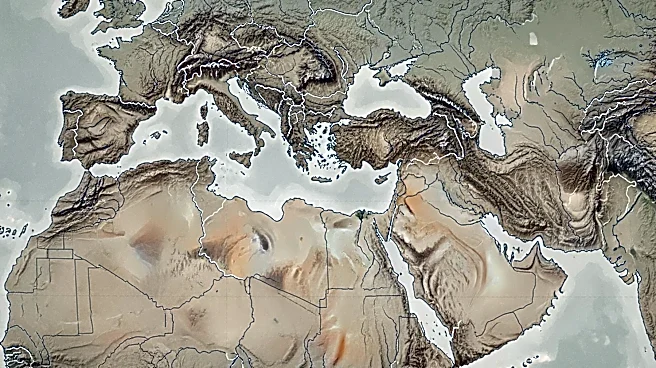
Europe's geographical boundaries are largely defined by natural features. To the north, the Arctic Ocean serves as a natural border, while the Atlantic Ocean forms the western boundary. The Mediterranean Sea, a crucial body of water for trade and cultural exchange, marks the southern limit of the continent. These bodies of water have historically facilitated trade and interaction between Europe and other regions, contributing to the continent's diverse cultural landscape.
In the east, Europe is commonly considered to be separated from Asia by the watershed of the Ural Mountains, the Ural River, the Caspian Sea, the Greater Caucasus, the Black Sea, and the waterways of the Turkish Straits. This division is not only geographical but also cultural, as it has influenced the development of distinct civilizations on either side of these natural barriers.
The Concept of Europe
The concept of Europe as a distinct geographical entity has evolved over time. Historically, Europe was often defined in contrast to Asia, with the Ural Mountains and other natural features serving as the dividing line. This separation was reinforced by cultural and historical factors, such as the spread of Christianity and the development of distinct political systems.
The idea of Europe as a continent has been shaped by its physical size and the weight of history and tradition. Despite much of its border being over land, Europe is generally accorded the status of a full continent due to these factors. The continent covers about 10,180,000 square kilometers, making it the second smallest continent using the seven-continent model.
Political Divisions
Politically, Europe is divided into about fifty sovereign states, with Russia being the largest and most populous. Russia spans 39% of the continent and comprises 15% of its population. This political division has been influenced by historical events, such as the fall of the Roman Empire and the subsequent rise of various kingdoms and empires.
The European Union, comprising 27 member states, represents a significant political entity within Europe. It has facilitated economic and political integration among its members, further shaping the continent's identity. The EU's formation and expansion reflect the ongoing evolution of Europe's political landscape, influenced by both geographical and historical factors.