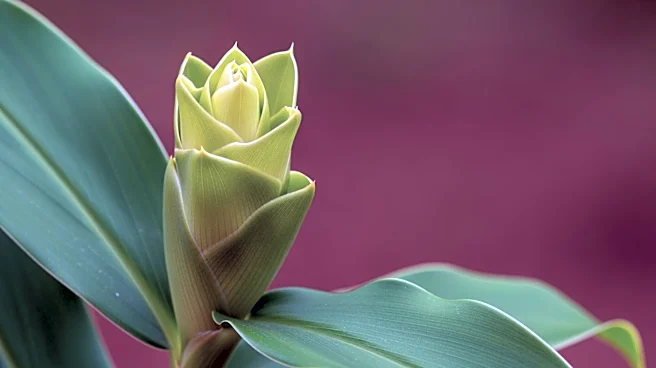






The Zingiberaceae family, commonly known as the ginger family, is a fascinating group of flowering plants that thrive in tropical and subtropical regions around the world. Known for their aromatic properties and culinary uses, these plants have a rich botanical profile that makes them a subject of interest for botanists and plant enthusiasts alike. This article delves into the unique characteristics and global distribution of the Zingiberaceae family.
Botanical Characteristics
The Zingiberaceae family comprises aromatic perennial herbs that are well-known for their creeping rhizomes, which are sometimes tuberous. These rhizomes serve as nutrient storage and are a key feature of the family. The plants typically have basal leaf sheathing that forms a pseudostem, which is taller than their true stems. These true stems are unbranched and emerge from the pseudostem. The leaves are arranged in a distichous pattern, meaning they are two-ranked and alternate, with a prominent midrib.
The flowers of the Zingiberaceae family are hermaphroditic and usually exhibit strong zygomorphism, meaning they are bilaterally symmetrical. They are arranged in raceme inflorescences and are subtended by conspicuous, spirally arranged bracts. The perianth is composed of two whorls, with a fused tubular calyx and a tubular corolla. The flowers have a unique structure where two of the stamenoids are fused to form a petaloid lip, and there is one fertile stamen located in the inner whorl.
Global Distribution
Members of the Zingiberaceae family are primarily distributed in the tropics and subtropics, with a pantropical distribution that spans Asia, Australia, Africa, and the Americas. The family is particularly diverse in Southeast Asia, where conservation efforts are underway to protect the high diversity of endemic and threatened species. The distribution of the family reflects its evolutionary history, with the earliest known fossils dating back to the Campanian age of the late Cretaceous period.
The subfamilies within Zingiberaceae, such as Alpinioideae, Zingiberoideae, and Tamijioideae, are found in tropical or equatorial regions of Asia, while Siphonochiloideae is restricted to the African tropics. This distribution pattern is believed to have been influenced by global climate shifts during the late Cretaceous period, which facilitated the expansion of tropical rainforests.
Ecological and Evolutionary Significance
The Zingiberaceae family has evolved to adapt to a wide range of ecological niches, contributing to its high species diversity. The plants can propagate asexually through their rhizomes or reproduce sexually through pollination, with birds and bees being the major pollinators. The family's diverse seed morphology is likely an adaptive result of inhabiting both temperate and tropical climates.
Conservation efforts are crucial for the Zingiberaceae family, particularly in regions like Southeast Asia, where deforestation and habitat degradation pose significant threats. Protecting these plants is vital not only for maintaining biodiversity but also for supporting local cultures and economies that rely on them for food, medicine, and socio-religious activities.