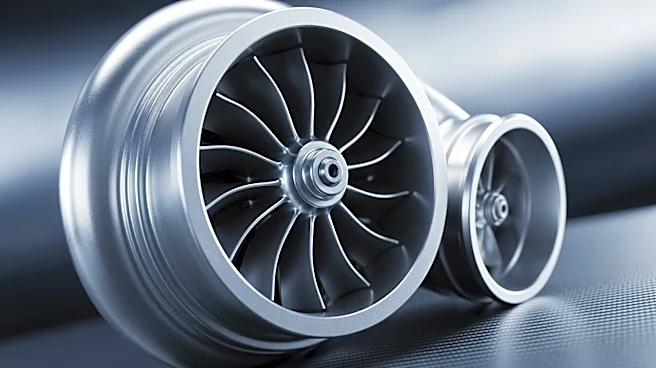





Turbochargers have played a pivotal role in the world of motorsports, offering a competitive edge through enhanced power and performance. From their early adoption in racing to their continued use in modern competitions, turbochargers have left an indelible mark on the sport. This article explores the history and impact of turbochargers in motorsports.
Early Adoption and Success
The journey of turbochargers in motorsports began in the 1960s, with their introduction in events
like the Indianapolis 500. The first turbocharged engine in motorsport was the Offenhauser engine, which made its debut at the 1966 Indianapolis 500. This engine, equipped with a Garrett AiResearch turbocharger, demonstrated the potential of turbocharging by achieving significant power outputs.
Turbochargers quickly gained popularity in racing, with the 1972 Porsche 917/10K becoming the first turbocharged car to win the Can-Am series. This success showcased the advantages of turbocharging, leading to its adoption in various racing categories. By the mid-1980s, turbocharged engines dominated Formula One, with manufacturers like Renault, Honda, and Ferrari producing powerful turbocharged engines.
The Turbo Era in Formula One
The original "Turbo Era" in Formula One spanned from 1977 to 1988, a period marked by intense competition and innovation. Turbocharged engines, with capacities as low as 1,500 cc, were capable of producing immense power, reaching up to 1,500 horsepower. This era saw significant advancements in turbocharger technology, as teams sought to maximize performance and reliability.
Despite their success, turbocharged engines were eventually banned from Formula One after the 1988 season due to concerns over cost and safety. However, turbochargers made a comeback in 2014, with the introduction of turbocharged 1.6-liter V6 engines. These modern engines combine turbocharging with advanced energy recovery systems, maintaining high power levels while improving efficiency.
Continued Influence and Future Prospects
Turbochargers continue to play a crucial role in motorsports, with their use extending beyond Formula One to other racing categories like the World Rally Championship and touring car racing. The technology has evolved to meet the demands of modern racing, with innovations such as variable-geometry turbochargers and electrically-assisted turbochargers enhancing performance and responsiveness.
As motorsports continue to push the boundaries of speed and technology, turbochargers remain at the forefront, driving innovation and performance. With ongoing advancements, turbochargers are set to play an even more significant role in the future of racing, offering new possibilities for speed and efficiency.