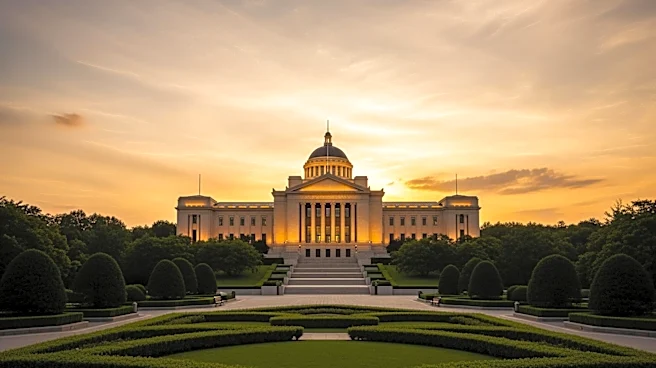








The White House stands as a powerful symbol of leadership and governance, not only in the United States but also around the world. As the official residence and workplace of the U.S. president, it represents the epicenter of American political power. However, the concept of a 'White House' extends beyond the borders of the United States, with various countries having their own versions of this iconic structure. This article delves into the significance
of the White House and its global counterparts, highlighting how they serve as symbols of authority and governance.
The White House in Washington, D.C.
The White House, located at 1600 Pennsylvania Avenue in Washington, D.C., has been the official residence of every U.S. president since John Adams. Completed in 1800, it serves as both a home and a workplace for the president, making it a central hub for executive decision-making. The White House is not just a building; it is a symbol of the presidency and the democratic values of the United States. Its iconic design and historical significance make it a focal point for national and international attention.
The White House is also a place where significant political events and decisions take place. From hosting foreign dignitaries to holding press conferences, the White House is a stage for diplomacy and governance. Its role as a symbol of leadership is further emphasized by its presence in media and popular culture, where it is often depicted as the heart of American political power.
Global Counterparts of the White House
While the White House is unique to the United States, other countries have their own versions of this iconic structure. For instance, the Witte Huis in the Netherlands, which translates to 'White House,' is a skyscraper in Rotterdam. In Kyrgyzstan, the White House in Bishkek serves as a presidential building, symbolizing the country's leadership. Similarly, the Tampere City Central Office Building in Finland is nicknamed the 'White House,' reflecting its governmental function.
These global counterparts, while differing in architectural style and function, share a common purpose: to serve as centers of political power and governance. They are symbols of their respective nations' leadership and play crucial roles in the political landscape of their countries.
The Cultural Impact of the White House
The White House's influence extends beyond politics, impacting culture and society. As a symbol of leadership, it inspires architectural designs and governmental structures worldwide. The concept of a 'White House' has become synonymous with political authority, influencing how other nations design their centers of power.
Moreover, the White House's presence in media and popular culture reinforces its status as a global symbol. It is often featured in films, television shows, and literature, where it represents the pinnacle of political power. This cultural impact underscores the White House's role as more than just a building; it is a symbol of leadership that resonates globally.
In conclusion, the White House is a powerful symbol of leadership, both in the United States and around the world. Its global counterparts, while unique in their own right, share this symbolic significance, serving as centers of political power and governance. The White House's cultural impact further solidifies its status as an enduring symbol of authority and leadership.